Tech News Weekly 457 Transcript
Please be advised that this transcript is AI-generated and may not be word-for-word. Time codes refer to the approximate times in the ad-free version of the show.
Abrar Al-Heeti [00:00:00]:
Coming up on Tech News Weekly, I'm joined by Jennifer Pattison Tuohy to discuss Apple's long-awaited smart display. And we also chat about Apple's strategy with the iPhone Duo. Then I'm joined by CNET's Joe Supan to talk about some solutions for curbing space junk. And Lisa Eadicicco from CNN is here to discuss Anthropic's leaked IPO filing and some of the risks the company has reportedly flagged with its models. All that coming up on Tech News Weekly.
Abrar Al-Heeti [00:00:35]:
This is Tech News Weekly with Jennifer Pattison Tuohy and Abrar Al-Heeti, episode 457, recorded on October 1st, 2026: Are AI Models a Risk to Humanity? Hello and welcome to Tech News Weekly, the show where every week we talk to and about the people making and breaking tech news. I am your guest host, Abrar Al-Heeti, filling in for Mikah Sargent. And today I am joined by Jennifer Pattison Tuohy. Hello, Jennifer. How are you?
Jennifer Pattison Tuohy [00:01:03]:
Hi, I'm very well, thanks. Really excited to be here. Girl power.
Abrar Al-Heeti [00:01:07]:
Yeah, girl, exactly. No, I love this. I'm excited to do this with you. And happy Techtober. We made it through Techtember. How are we feeling?
Jennifer Pattison Tuohy [00:01:15]:
Not good.
Joe Supan [00:01:16]:
Good.
Abrar Al-Heeti [00:01:16]:
Yeah, that's exactly how I feel. So I'm glad we're at the same page.
Jennifer Pattison Tuohy [00:01:18]:
It's about to get crazy, it looks like. Yeah.
Abrar Al-Heeti [00:01:22]:
Isn't it always too? That's the problem is it's never not, but it always just gets more.
Jennifer Pattison Tuohy [00:01:26]:
Yes, every year more and more.
Abrar Al-Heeti [00:01:28]:
Always. Well, we're in the industry at an exciting time, so I guess we can't complain too much.
Jennifer Pattison Tuohy [00:01:34]:
Very true. Lots of exciting, controversial—
Abrar Al-Heeti [00:01:38]:
Yes, exactly.
Jennifer Pattison Tuohy [00:01:39]:
Always good for the news.
Abrar Al-Heeti [00:01:41]:
Always enough stuff to make her blood boil, which is fantastic. Yeah. And so if you are tuning in for the first time, this is the part of the show where we discuss our stories of the week. And we're going to start off with Jennifer. So tell us about your story of the week.
Jennifer Pattison Tuohy [00:01:55]:
It's finally happening. Finally. In my world, this is like Huge news, although it's not technically— it's rumor still.
Lisa Eadicicco [00:02:06]:
Right.
Jennifer Pattison Tuohy [00:02:07]:
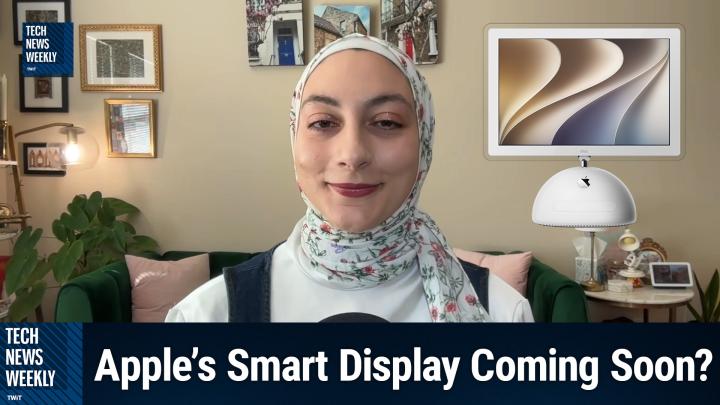
But this is something that's been rumored for years. Apple is allegedly finally launching its smart home display this month, according to Mark Gurman, the ever well-sourced Mark Gurman at Bloomberg. The smart home hub with a screen, which we have all been calling the HomePod, Side note, I really hope that's not what they call it, but that's what we've all been calling it— will launch on October 13th. So he has a fairly extensive deep dive into the product. He's covered a lot of rumors of this over the years. So a lot of this is sort of stuff he'd already covered. But from reading between the lines in what he says in— and I'm going to go through it here in a minute— but I get the impression from reading this that he's actually now seen one.
Lisa Eadicicco [00:03:02]:
Yeah.
Jennifer Pattison Tuohy [00:03:03]:
Um, so I think we've got some pretty concrete details here. So this is basically the, the fun thing for, um, sort of Apple fanboys is that, um, he says it looks, the design looks a lot like, um, what the original iMac, um, right. Which I forget, 'cause I'm not, I never had one. What was it called? The one with the—
Abrar Al-Heeti [00:03:24]:
I know what you're talking about with like the arm and—
Jennifer Pattison Tuohy [00:03:27]:
Um, the iMac G4. Sorry.
Lisa Eadicicco [00:03:29]:
Right.
Abrar Al-Heeti [00:03:29]:
Yeah.
Lisa Eadicicco [00:03:30]:
Yes.
Jennifer Pattison Tuohy [00:03:30]:
Um, so the, a smaller version of the iMac G4. And so it'll have like a half-dome base with an arm and then a 6-inch screen. And it's going to be about as thick as an iPhone. It doesn't have a battery, so it's going to always have to be plugged in.
Lisa Eadicicco [00:03:48]:
Mm-hmm.
Jennifer Pattison Tuohy [00:03:49]:
German says it comes in a standard gray finish. It's USB-C. The screen sits above this base and the base is the speaker. And you're going to be able to sort of tilt the display back and forth. And, you know, very much looks like the iMac G4.
Joe Supan [00:04:07]:
Yeah.
Jennifer Pattison Tuohy [00:04:07]:
And it's gonna have facial recognition with a Face ID camera style thing on the front that's also gonna be used for FaceTime. But it will also have voice recognition, which the current HomePods, which are part of Apple Home systems, have. And you can also use your iPhone as a sort of recognizing— recognition device. Because what's really exciting about this for anyone that's struggled with an iPad sharing in their family is that this will have multi-user support, which is something that's pretty rare on Apple devices. So it's gonna have a lot of all the apps you would expect, it sounds like, according to Gurman, Calendar, Messages, Photos, FaceTime, Notes, Reminders, Music, all that. And it's also going to sort of be, it sounds like the interface is gonna look a lot like the sort of current StandByMe that you might be familiar with if you use that on your iPhone.
Lisa Eadicicco [00:05:06]:
Mm-hmm.
Jennifer Pattison Tuohy [00:05:06]:
simple and, uh, clean look. Um, also sounds like it's going to have a lot of similarity to the Duo, which I know we're going to talk about a bit more here shortly, um, which makes a lot of sense because it's a similar size.
Abrar Al-Heeti [00:05:20]:
Right, exactly.
Jennifer Pattison Tuohy [00:05:21]:
Yeah, but you can sort of see where there may have been some symbiosis between these 2 products as, as they developed them. Um, apparently it will have a virtual white ring light that illuminates if you're looking at it at night so that it can recognize you. And it's also going to— well, and this is not 100% clear how it's exactly going to work. I assume— we assume it's going to have the Home app for controlling smart home systems, but—
Lisa Eadicicco [00:05:49]:
Right.
Jennifer Pattison Tuohy [00:05:50]:
Or for controlling your smart home, like your lights and your locks. But it doesn't— and we've had rumors in the past that it may not work with third-party apps. And there's no mention in this specific report of how you might be able to control your smart home devices that perhaps aren't connected with Apple HomeKit. So that's going to be one to watch to see how much of this is going to be a kind of Apple lock-in or whether it will have more, a broader integration. I mean, Apple supports Matter. So if a device works with Matter, that should mean you'll be able to control it through this device using your voice or touchscreen. However, Apple hasn't got hasn't been great on support for new Matter device types.
Lisa Eadicicco [00:06:36]:
Hmm.
Jennifer Pattison Tuohy [00:06:36]:
So it's still somewhat limited. But really an interesting final line in Gurman's post, this was from Tuesday, I believe, was that Apple is also developing a broader smart home ecosystem that expands on the HomeKit software and supports new categories of connected products. And he's working with third-party manufacturers on new devices designed for the Siri AI Home platform. So that is very intriguing.
Lisa Eadicicco [00:07:06]:
Yeah.
Jennifer Pattison Tuohy [00:07:07]:
And the other important point here is that one of the reasons this has been delayed so long is because of Siri AI. And while Siri AI launched for everyone on earlier last month— gosh, it's October— earlier last month, Siri AI has not been in the home at all yet. You can't use it on your HomePods or for any kind of specific home control. So this, I'm assuming with this announcement, we're going to get, this is what Siri AI can do in your home. And that is going to be very interesting. So yes, I'm excited for this. Obviously, this is all rumored, but Gurman's pretty spot on most of the time.
Abrar Al-Heeti [00:07:52]:
He's got a good track record.
Joe Supan [00:07:54]:
Yeah.
Abrar Al-Heeti [00:07:54]:
Yes, he does.
Lisa Eadicicco [00:07:54]:
Absolutely. Do you, are you into this, Mark?
Jennifer Pattison Tuohy [00:07:57]:
Are you excited about this? Are you much of an Apple user?
Abrar Al-Heeti [00:08:02]:
I am an Apple user in terms of my iPhone and my AirPods. But I have my Google smart home devices. And I use them to play music and set timers. And I think now that Gemini has gotten better— and I think that's kind of the question I want to ask you. And you touched on this. Now that Gemini has gotten better, it's less obnoxious to ask questions and actually get good answers when I speak with my smart home devices. My smart speakers, but, um, you know, you mentioned the fact that Siri AI being out is, um, uh, it coincides with this kind of launch, rumored launch that we've been waiting for for years and years and years. And so I think that's, that's a really big piece of it.
Abrar Al-Heeti [00:08:43]:
But also I want to ask you what you think beyond the brand power of Apple, what would they need to do differently to make people choose that over similar products for folks like me who are like, well, I've already got my Google smart speakers. Like, why would I need to do that? Even if, you know, even if I have an iPhone, you know.
Jennifer Pattison Tuohy [00:08:58]:
Yeah, yeah. So this is something I've been pondering for a while, and I see your Nest Hub there in the background. What is that, like 5 years old?
Abrar Al-Heeti [00:09:06]:
It is, I believe.
Jennifer Pattison Tuohy [00:09:07]:
Yeah. So Google's got a bit of an issue here, is that its hardware is aging. Um, and we got a new smart speaker from them this year, but— and they've promised, they have said to me, and I've reported this and others have reported it, that they will have new smart displays, but, um, they're getting really long in the tooth. And the Google Home Gemini for Home is very different from the Gemini you use on your phone. You may have noticed.
Abrar Al-Heeti [00:09:36]:
Definitely.
Jennifer Pattison Tuohy [00:09:37]:
It's not the same experience. And Siri AI on the phone has been incredibly impressive, I have found.
Abrar Al-Heeti [00:09:45]:
Yes, definitely.
Jennifer Pattison Tuohy [00:09:46]:
And I have tested both Gemini for Home and Alexa Plus, which are the 2 other generative AI-based voice assistants for the smart home. Um, and Alexa is much better than Gemini for home at this stage. I know people always go, what are you talking about? Gemini is so much better than Amazon. Like, this is different.
Abrar Al-Heeti [00:10:04]:
Totally.
Lisa Eadicicco [00:10:05]:
Different.
Jennifer Pattison Tuohy [00:10:05]:
You've got to understand the home thing is very different. So where Apple can really win the game here, I think, is if they do come out of the gates with a super capable, powerful generative AI-based smart home voice assistant. I don't know that they're going to do that, but if they can, They've definitely got an opportunity there. The hardware is very tricky in the smart home. Amazon has tried every version of smart displays, and some have worked well, some not so well.
Abrar Al-Heeti [00:10:38]:
Yeah.
Jennifer Pattison Tuohy [00:10:38]:
Too many with ads.
Abrar Al-Heeti [00:10:39]:
Oh my gosh.
Jennifer Pattison Tuohy [00:10:41]:
I think my concern with what Apple's gonna do here is if it is too limited. There's a really fine line between making it simple and easy to use for anyone in the home, which is key for a device that's in theory. This can be wall-mounted or put on a table, according to the rumors.
Lisa Eadicicco [00:10:59]:
Sure.
Jennifer Pattison Tuohy [00:10:59]:
Um, you need it to be as easy to use as a light switch, as intuitive as a light switch. Um, but you also want to be able to have decent— like, be able to dig down and have more control than just turning on and off a light. You want to be able to set scenes and moods and control different devices. And so that's a balance that's hard to do. But Apple, you know, has got the, the chops when it comes to the software, which I would say Amazon hasn't. succeeded with.
Lisa Eadicicco [00:11:27]:
Yeah.
Jennifer Pattison Tuohy [00:11:27]:
So yeah, they've got a chance here. I mean, the smart display category has very much sort of withered on the vine. There hasn't been a lot of innovation in that space in a while. Lots of versions, but nothing new, nothing too new or exciting. So yeah, we'll see. We'll see if they've— if they manage to nail this one.
Abrar Al-Heeti [00:11:47]:
And I wonder if Apple's emphasis on privacy could be a huge asset here too, because I think that's obviously a growing concern with a lot of people with all this smart devices in their homes and all the creepy things that people hear of.
Jennifer Pattison Tuohy [00:11:59]:
Yeah.
Abrar Al-Heeti [00:11:59]:
Okay, well, if Apple makes a promise that feels more, more promising, then maybe that is something they're willing to, uh, go ahead and buy and, and have in their homes. I don't know.
Jennifer Pattison Tuohy [00:12:08]:
Yeah, for sure. I mean, this is gonna be expensive.
Joe Supan [00:12:12]:
Mm-hmm.
Jennifer Pattison Tuohy [00:12:13]:
I have no doubt. I think we're talking $250 minimum.
Joe Supan [00:12:17]:
Yeah.
Jennifer Pattison Tuohy [00:12:17]:
So, um, which is gonna make people sad, but is without a doubt, I mean, the, the current HomePod just got a big price bump. So this is going to be an expensive device. It could be— may— we may be looking $350. So, but you're going to be paying for that. That privacy promise is something that people, I think, are willing to pay for and also probably have to start being prepared to pay for. One of the reasons Amazon devices have been so inexpensive is because they are heavily ad-subsidized.
Lisa Eadicicco [00:12:45]:
Yep.
Jennifer Pattison Tuohy [00:12:46]:
Um, the company's hardware has always had that payoff. You know, you buy the Kindle with the ads on the front for less money.
Lisa Eadicicco [00:12:53]:
Yeah, exactly.
Jennifer Pattison Tuohy [00:12:53]:
So yeah, you, you know, you have to— if you, if you're— it's a sad state of affairs, but that's where we're at, um, today, that you have to— you're gonna have to pay more if you want that privacy. Um, because it costs— also costs these companies more, um, to not rely on the cloud, to use more local control, uh, to do more centralized in your home rather than centralized in the cloud. So it's going to be interesting to see how, how Apple approaches that side of it. But today its smart home platform has been incredibly focused on local control. However, since they introduced Siri AI— so there is a small section of AI, um, Apple intelligence for the home, that just launched with iOS 27, and that is in the camera system, um, their HomeKit Secure Cam— Secure Video camera system, um, which does do things like AI text descriptions. So if when your camera sees someone coming past your house, it will say UPS man at the door rather than just person at the door.
Abrar Al-Heeti [00:13:53]:
Right.
Jennifer Pattison Tuohy [00:13:54]:
That does go through the cloud. So, they have shifted more to the cloud now, but they have their private cloud compute, which, um, they're, they're very transparent about how that works. And, um, I think most people feel more comfortable with that than they would potentially with Amazon or, um, Google's versions, although both of those companies do offer pretty robust promises around their privacy and security. It just comes down to who you feel comfortable with and who you trust.
Abrar Al-Heeti [00:14:22]:
Yeah, absolutely. Absolutely. Well, everyone, you have time to start saving money for what is sure to be an expensive device. And we'll see what happens later this month. And we will continue to talk about Apple with my story of the week. It's Apple Day. It's an Apple Day. Congratulations.
Abrar Al-Heeti [00:14:37]:
An Apple Day keeps your money away. I don't know.
Jennifer Pattison Tuohy [00:14:42]:
Takes your money away.
Abrar Al-Heeti [00:14:43]:
Takes your money away. That's the word that we need.
Lisa Eadicicco [00:14:45]:
Yeah.
Abrar Al-Heeti [00:14:46]:
And it is time to talk about my story of the week. And I'm going to talk about the iPhone Duo, which has been the topic of conversation for many weeks and will continue to be the topic of conversation, I think, for the foreseeable future. But I wanted to kind of talk about this commentary that I wrote this week about all of the back and forth conversation regarding whether the iPhone Duo is worth the nearly $2,000 price tag. And yes, it is a lot of money. I will also acknowledge that that's just how much foldable phones cost. So then that begs the question. of is a foldable phone worth it, especially if it's from Apple. And there's been a lot of heated debate over this, especially pointing to the fact that Apple is, quote unquote, late to the foldables game.
Abrar Al-Heeti [00:15:27]:
Lots of Android users are very bitter about the fact that it's getting so much attention. And I totally, totally understand that. So I wanted to kind of touch on the fact that my opinion is that— and I think there are numbers to back this— that Apple doesn't want everyone to love the iPhone Duo. Apple is not counting on everyone to drop everything, run to the store, and buy a $2,000 foldable iPhone. This phone comes out later this month on October 23rd. Preorders start on the 16th, and I had some time with it at Apple Park, but I am kind of holding back from making a formal opinion, obviously, until I get to review the phone. But with the limited time that I've had, I really like the way it feels. I love the passport size.
Abrar Al-Heeti [00:16:14]:
Design of it. I love that on the Galaxy Z Fold 8. And it just feels so intuitive. And it's great for vertical content and horizontal content. And it's just cute. And I think cute matters, right? You want your hardware to feel cool. And so there have been some people who I think anticipate that this is supposed to be kind of an evolution of the iPhone in the way that it will become a mainstream Apple product. But I am not necessarily sure about that because foldable phones, are niche and probably will remain niche for the foreseeable future.
Abrar Al-Heeti [00:16:48]:
I think it's something for people who are bored of the way their phone feels, want something a little different, and also have the money to spend on something this pricey. And that's not everybody. So I have some data that, you know, from Counterpoint Research that globally cumulative foldable phone shipments in the 8 years since this category launched, they're slated to surpass 100 million units by the end of 2026. But that is just a fraction of the billions of phones sold across that period. So just this year alone, more than 1 billion total smartphone shipments. So compare that to 100 million units, you know, cumulatively of foldable phones. So it's a very niche segment. And the reason for that, again, is price and understanding why a foldable phone is something that people might want.
Abrar Al-Heeti [00:17:32]:
And so I'm sure that Apple understands this. And that's why the iPhone Duo exists as an option rather than a replacement. So if you want the If you want a baseline phone, you have the iPhone 17 and probably soon the iPhone 18 baseline model. If you want something light, you have the iPhone Air. If you want something cheaper— I'm not going to use the word cheap because I don't think it's cheap— but the iPhone 17e. And then if you want that ultra-premium, you know, photo-driven device, you have the iPhone 18 Pro models. So, you know, the fact that this was released with the iPhone 18 Pro models really proves that this is being positioned as an ultra-premium device. And the fact that it's reportedly being made in limited quantities, it's going to be a status symbol.
Abrar Al-Heeti [00:18:12]:
For a lot of people, so the point is you will have options. The iPhone Duo is an option, and it's not going to immediately upend the types of phones that are available to you, even from Apple. It's just time that Apple hopped on board if everyone else is doing it. And the amount of times that I've been told, you know, when I'm when I have a foldable Android phone, oh, that's so cool! But I wish Apple made it. I mean, they they know this, right? So they're waiting to make their debut once once all those you know issues were kind of. Mostly solved and they were able to step into the space and say, look at this refined product we have with a matte internal display and barely any crease. All those things that would really speak to people. So I want to hear from you, Jennifer.
Abrar Al-Heeti [00:18:50]:
Are you into foldable phones? Have you ever used one? Do you want to buy this?
Jennifer Pattison Tuohy [00:18:57]:
So, no, I agree with you that it is a— it's good there as an option. I think it's very— it's such an Apple option to come to the party late.
Abrar Al-Heeti [00:19:06]:
Yes.
Jennifer Pattison Tuohy [00:19:07]:
But theoretically better than everyone else. We don't know because no one's tested it yet. But yeah, exactly. Um, they waited until it was a point where they could do it well. I remember CES maybe 5 years ago. How long has the Samsung Foldable been out? 4 or 5 years?
Abrar Al-Heeti [00:19:24]:
It came out like 2019, the first Fold.
Lisa Eadicicco [00:19:27]:
Yeah.
Jennifer Pattison Tuohy [00:19:28]:
Okay.
Abrar Al-Heeti [00:19:28]:
So it came available here.
Jennifer Pattison Tuohy [00:19:30]:
Yeah. So I think so. And it was pre— yeah, it was pre-COVID. I remember sitting in the Samsung press conference, which at CES used to be this huge deal that you'd have to stand in line for like hours. And I was in the— I was near that. They always reserve a whole big section for the Korean media. Yeah. And I was right near them and every single one of them had the Fold.
Joe Supan [00:19:50]:
Yeah.
Jennifer Pattison Tuohy [00:19:51]:
And, you know, and all the Samsung execs had the Fold and I was like, oh, that looks really cool.
Abrar Al-Heeti [00:19:56]:
Right.
Jennifer Pattison Tuohy [00:19:57]:
And I was thinking, but I never— I just never crossed— well, never crossed my mind to spend the money on one.
Lisa Eadicicco [00:20:03]:
Exactly.
Jennifer Pattison Tuohy [00:20:03]:
And also I'm just— I haven't been ever a dedicated Android user. I've always been an iPhone user.
Abrar Al-Heeti [00:20:09]:
I use—
Jennifer Pattison Tuohy [00:20:09]:
I have used Android. I've had a Pixel and I've had a Samsung Galaxy, but it would've been a big shift to spend that much money on a whole new ecosystem for, for me. Um, but I, for me, I've always had the small phone and an iPad Mini. That's been my Apple life.
Abrar Al-Heeti [00:20:29]:
Right.
Jennifer Pattison Tuohy [00:20:29]:
Um, and I've always enjoyed that because when I wanna just do some more dedicated content consumption, I would use my Mini. Um, I would also use it for things things like note-taking or anything that needed a little bit more space when I'm traveling rather than using my laptop. And so, that had always been the ideal solution for me. But the problem with the Mini, and I don't know whether they did this, this is a complete conspiracy theory, but maybe they did this on purpose to keep the pent-up demand, but they've only released like a couple of updates to the Mini over the years and it's always been really expensive in comparison to the iPads.
Abrar Al-Heeti [00:21:05]:
Yeah.
Jennifer Pattison Tuohy [00:21:05]:
Fuller, bigger-sized iPads. Um, it's always been a very expensive device. And so I, I've gotten to the point now where my mini, which I don't actually know where it is because I've just been traveling, so I had it in my bag. Um, my mini is kind of getting long in the tooth. And, um, I did just buy the— I did upgrade to the 18. Okay, the 17. What's the one that just came out? 17 Pro Max last year, the orange one.
Abrar Al-Heeti [00:21:29]:
Yes.
Jennifer Pattison Tuohy [00:21:30]:
So this was the first year I went Max. Because I was like, oh, you know, I'm kind of missing the big screen and my iPad Mini is a little too old now. It was getting a bit long in the tooth and I can't— now I sort of wish I'd waited.
Abrar Al-Heeti [00:21:45]:
I was gonna say, it sounds like the Duo would solve your problems.
Jennifer Pattison Tuohy [00:21:48]:
Yeah, it fits my needs. That's a long way to say it does actually fit my use cases really well because it has everything I need from my phone, but then it becomes a Mini essentially, right? I mean, it's a little smaller, but it's about the same kind of format. I think there are two, there are two things that would keep me away from it, actually three. The first is, um, size, it being so chunky. I mean, I haven't held one, but I'm assuming it's quite a bit thicker than the—
Lisa Eadicicco [00:22:18]:
Right.
Jennifer Pattison Tuohy [00:22:18]:
Than the 17. And so like, you can't fit it in the back pocket. That, that is going to be a bit of an issue for me, um, because that's what I liked about having the two devices. Um, and then the second is the camera. Um, I love— so I have loved my 17 Pro Max. It's the zoom and the camera quality has just been like night and day from— I upgraded from a 15 Pro, so I love that. So I'm, I'm sad. I, I think you kind of downgrade a bit with the Duo camera.
Lisa Eadicicco [00:22:48]:
Exactly.
Jennifer Pattison Tuohy [00:22:49]:
Um, and then the third, um, concern— well, I mean, price, and it's the first gen. Like, I'm cutting edge when it comes to smart home. I'm not cutting edge when it comes to my smartphone. I like to wait for the next generation. So I think I'm probably going to be a Duo 2 gal whenever that happens.
Abrar Al-Heeti [00:23:11]:
I think you are the perfect customer for that, given everything you've just described, because I don't know how much better the camera will get next year because, you know, and we'll have to see, you know, if the camera ends up being mind-blowingly, surprisingly incredible without, you know, like not everyone needs a telephoto camera, you know, sometimes you're You're good with just the wide and the ultra-wide. And you just use optical zoom, and you're good to go. But yeah, I think that idea of waiting for Gen 2 for something that is so new totally makes sense. And I think a lot of people feel that way. And I think they're definitely going to solidify those decisions once we see how those reviews come out. We had a survey that published at CNET just before the iPhone came out. And only 25% of people said they'd be interested in a foldable iPhone. But I have a feeling that if we ran that survey today, that number would be much higher, right? Because it was a hypothetical device at the time.
Abrar Al-Heeti [00:24:07]:
And now people see it and it's everywhere. I mean, I know my feed is obviously tilted more in favor of the things that I post and like. And so I see a lot of iPhones. But I think everyone's been seeing it. And IDC had a forecast saying that global Global foldable phone shipments are going to grow by 12% this year, and much of that is driven by Apple. And by the end of next year, they're going to, you know, they're projected to have 40% of global market share of that foldable phone space. So it's definitely going to amplify. And then my other question for you is, because this is something, a discussion that I've seen too, some people saying that they would rather have a flip iPhone because for a while there were rumors, right? Would it be a flip phone? Would it be a book-style phone? And they went with the passport style, which I think is the best.
Abrar Al-Heeti [00:24:54]:
best, most versatile format. But are you— would you rather have like a flip phone that you could dramatically shut?
Jennifer Pattison Tuohy [00:24:59]:
Yeah, I mean, I miss those days. I love my flip phones. Um, I, I don't know.
Abrar Al-Heeti [00:25:07]:
I, I—
Jennifer Pattison Tuohy [00:25:08]:
that doesn't seem like that form factor adds a lot compared to the Duo. Like, you can see the genuine upgrade you're getting with the bigger screen. Um, whereas, you know, a flip phone would be slightly smaller, but it's going to be chunkier. So I, I I'm not, and I haven't, I've seen the, is it the Samsung Flip? What is the, or the Fold or what? I forget their names. They have lots of names.
Abrar Al-Heeti [00:25:33]:
There's flips and folds. There's all of it. Yeah.
Jennifer Pattison Tuohy [00:25:34]:
They flip and fold all over the place. I've seen a few of those in person and I do like them. And I, I, I think the biggest appeal for me about both of these devices, um, from, uh, the fact that from the difference from the candy bar style is having that smaller screen where you can have like, you know, you can glance at minimal notifications rather than just like a full feed. Right.
Abrar Al-Heeti [00:25:57]:
Yeah.
Jennifer Pattison Tuohy [00:25:58]:
So I think, I think that's nice to have that kind of barrier almost to your— the barrier to entry to your phone.
Lisa Eadicicco [00:26:04]:
Right.
Jennifer Pattison Tuohy [00:26:04]:
Um, but no, I'm, I would be— I'm more interested in it, in the Duo, than I would be in a Flip iPhone. Um, I, I feel like the Flip is a bit less— it just seems like it has less of a purpose, but it's a fun form factor.
Abrar Al-Heeti [00:26:18]:
Exactly.
Jennifer Pattison Tuohy [00:26:19]:
Not really, um, not really as compelling, um, for especially as my— in my job, I'm micro Victoria Song and Alison Johnson. Alison Johnson is our phone reviewer. She always has the Fold. And Alison and V often go to conferences, to events together. And V's always saying, I'm so jealous of Alison with her Fold because she can, like, file copy from her phone.
Abrar Al-Heeti [00:26:41]:
So true.
Jennifer Pattison Tuohy [00:26:43]:
And that appeals to be able to, you know, because when we, you know, and you know, when you go to cover these events, you've got your camera, your phone, your laptop, your notebook or whatever else. And it's like, can you put it all into one device?
Abrar Al-Heeti [00:26:56]:
It's a portable device. That's perfect. Exactly. Yeah, the book style really is perfect for that. I feel like we've done a really good job talking about expensive devices that people may or may not want today. So this has been a success. Thank you, Jennifer, for taking the time to join us today. And if people want to follow your great work and all your upcoming stories about this, what may or may not be called the HomePod, where should they go?
Jennifer Pattison Tuohy [00:27:19]:
Yeah, you can follow me at theverge.com. That's where all of my stories publish. just click and get all my articles emailed to you. And please subscribe if you come along and read my stuff because there's going to be a lot of Apple HomePod stuff coming soon. So, so yeah, yeah, keep, keep an eye on that. And then you can see me on— connect with me at socials at @smarthomemama. And I'm also JP2E on, um, on the X occasionally.
Abrar Al-Heeti [00:27:50]:
Occasionally is right. Yeah. Thank you so much, Jennifer. So good talking with you. We are going to take another quick And we'll be back after that. Hello and welcome back. It is time to talk about space junk. So there are around 16,000 satellites orbiting the Earth right now, and these are designed to deliver services like high-speed internet and cellular connections in even the most remote regions.
Abrar Al-Heeti [00:28:13]:
And they are also creating a lot of space junk. So to talk more about that, I am joined by CNET senior writer and my colleague, Joe Supan. Joe, thank you for being here.
Joe Supan [00:28:23]:
Yeah, thanks for having me, Burr.
Abrar Al-Heeti [00:28:24]:
So good to chat with you. I was very fascinated with the story that you wrote because you've covered space junk pretty heavily over the years. And so I want to start by asking you to give kind of a brief overview of the scale of clutter that we're talking about here and what the ramifications are.
Joe Supan [00:28:40]:
Sure. Yeah, it really, if you looked at a graph of it, it just looks like a straight line went up in 2019 when Starlink started launching satellites. So the first satellite launched in 1957. It wasn't until 2010 that we passed 1,000. And then when Starlink launched in 2019, we were at 2,000. And today, like you said, we're almost at 17,000. So it really just increased exponentially. They started using reusable rockets, and it sort of just made the economics of launching satellites into space a lot more reasonable.
Lisa Eadicicco [00:29:18]:
Yeah.
Joe Supan [00:29:19]:
That's why we see this huge industry being birthed about space domain awareness. And that's not even taking into account all the debris that you mentioned. That's on a whole other realm.
Abrar Al-Heeti [00:29:31]:
That sounds very, very messy. And you talk in this piece about the Kessler syndrome. What is that?
Joe Supan [00:29:38]:
Yeah, it's kind of like— it sounds like science fiction a little bit. If you've ever seen the movie Gravity, that's a really dramatic version of what the Kessler syndrome would look like. It's basically just because you have all these pieces of debris, even if something like the size of a pebble could take out a satellite because it's zooming around in orbit so fast. So the idea is that one collision like that would just create so much more debris, and then that would— it would basically be like a cascading scenario where debris would add to debris and all of a sudden space would become inoperable for everyone.
Abrar Al-Heeti [00:30:14]:
No big deal. Yeah, yeah, yeah.
Joe Supan [00:30:17]:
Right.
Abrar Al-Heeti [00:30:18]:
So to kind of address that, you have this piece where you talk about something called Scout-S and what that's designed to do. Tell me about that and your experience seeing that and visiting the company that makes it.
Joe Supan [00:30:31]:
Yeah, it's this company called LeoLabs. They're kind of like the leading radar company in the, in the world, I would say. They have these huge radar sites all over the world, like in the Azores Islands and Maui. But this— the Scout-S item or tracker that I was seeing is— it's about the size of like a shipping container. So it's really designed to be transportable anywhere in the world. Like you could set it up within a few hours. All you need is like a generator. And they ironically had like a Starlink dish to feed the data back into a computer.
Abrar Al-Heeti [00:31:06]:
Hmm.
Joe Supan [00:31:07]:
So It's really— they described it to me as how computers have gotten smaller over the year. This would be like the iPhone of trackers. You want to have a mesh network of them all around the world so you can keep an eye on different corners of the sky.
Abrar Al-Heeti [00:31:24]:
Yeah. You attended as part of the story, I'm going to try to say this without tripping over because it's a long title, the Advanced Maui Optical and Space Surveillance Technologies Conference. It really rolls off the tongue.
Joe Supan [00:31:34]:
Yeah.
Abrar Al-Heeti [00:31:36]:
What was the atmosphere at that conference like? I mean, was the general feeling kind of more doomsday about how things are going? Because what you're describing sounds very stark. Or I'm assuming the point of this is kind of, you know, working out solutions and, you know, things like Scout S. But tell me about kind of like the environment there.
Joe Supan [00:31:53]:
Yeah, it's a really interesting mix because it's like a lot of companies like LeoLabs are hawking their products, which are like basically all about space situational awareness, how you can track debris, other satellites. But there's like a very kind of strange overlap with that and military applications because it's like, I don't think they are— they're definitely worried about debris. That's— but I think a lot of these are— the more interesting or valuable thing for a lot of these companies is like, being able to track other countries' satellites and determine what they're doing by the way those satellites are behaving. So I think that's really where the money is at for a lot of these companies. But there's also a big academic presence there. So I was kind of getting 2 different types of conversations. One would be like, we have this all— the technology is getting so great, we're advancing leaps and bounds with this. But then I would talk to academics and they would say, this is so unsustainable.
Joe Supan [00:33:00]:
This is, uh, yeah, this is ridiculous. We can't have this much activity in space without better coordination.
Abrar Al-Heeti [00:33:07]:
I feel like that tracks, that, uh, those viewpoints are very like academic versus, versus corporate. So, um, so how did we get to a point where there is so much junk in space? And what do guidelines and regulations kind of look like? Are they enough to avoid Disaster?
Joe Supan [00:33:25]:
Yeah, I think like at least a, uh, a gravity-like disaster. I don't think that's— I don't think like an overnight just catastrophe like that is probably gonna happen. Um, but I just think for a long time these countries, including the US, like weren't thinking about space, uh, in a— as like a sustainable environment. Like we— China, the US, Russia, and India all conducted like anti-satellite tests where they blew up their own satellites and created like hundreds of thousands of pieces of debris, some of them in orbits where that it'll never— I mean, it'll take a century to come down. So we weren't really— I think no one was imagining a world where there would be like, like tens of thousands of Starlink satellites, that space would be so valuable. So people were kind of behaving irresponsibly when it came to debris for a long time.
Abrar Al-Heeti [00:34:22]:
Yeah.
Joe Supan [00:34:24]:
So it's— I think like as far as, is, is there some reason for optimism maybe? Like, I, I think everyone believes like the technology is there to do this stuff sustainably. It's more about like kind of the geopolitical conditions communicating between countries and stuff like that.
Abrar Al-Heeti [00:34:43]:
That was a really interesting point that you brought up, that idea of you know, the importance of communication. What a concept, right? Which is interesting. I want to— yeah.
Joe Supan [00:34:54]:
Oh, it was just wild to me. Like, I've heard this a few times that, like, China is the big kind of country everyone talks about with this. But it's like, you'd be surprised how much it's— a lot of it is just like, we don't have an email for them and there's a language barrier. So I feel like the The system for this is not all that sophisticated right now. It's just how it's difficult to communicate with anyone on the other side of the world.
Abrar Al-Heeti [00:35:19]:
Yeah, borders don't work when you're up in space and we're all on the shared planet, right? We got to kind of figure that out a bit.
Joe Supan [00:35:24]:
Exactly, yeah.
Abrar Al-Heeti [00:35:26]:
So to kind of wrap it up here, based on all of your reporting, do the companies launching these satellites seem to have kind of a viable plan for deorbiting? orbiting them for, um, you know, are they just kind of— it seems like it's just a race to claim orbital real estate, but what's, what's the plan here?
Joe Supan [00:35:44]:
Yeah, they, they're all kind of— they all kind of follow SpaceX's lead, I would say. Um, and SpaceX is, I think, has generally been like a pretty responsible operator, uh, in terms of like maneuvering to avoid collisions and deorbiting. They deorbit after 5 years. Um, So that is good in one way because they're keeping the orbits clear and stuff.
Lisa Eadicicco [00:36:09]:
Right.
Joe Supan [00:36:09]:
But there is kind of a whole other box of worms that people don't really know what the effect on our climate or the stratosphere will be by just burning up so much metal in space over time. It'll be thousands of SpaceX satellites that'll deorbit per year soon. So it's That's sort of a big unknown people are worried about too. So no easy answers in space, I guess.
Abrar Al-Heeti [00:36:35]:
No easy answers in space. That's so true. Drew, I love following your work and I'm so glad that we were able to chat about this. If people want to also follow your work, where should they go?
Joe Supan [00:36:43]:
Yeah, just go to cnet.com. Yeah, you can search my author name and check it out.
Abrar Al-Heeti [00:36:49]:
Perfect. Thank you so much. I really appreciate it. And I'm sure I'll talk to you soon.
Joe Supan [00:36:52]:
Yeah, sounds good. Thanks.
Abrar Al-Heeti [00:36:54]:
Take care.
Jennifer Pattison Tuohy [00:36:54]:
Bye.
Abrar Al-Heeti [00:36:55]:
All right. Let's take one more break and we'll be back to talk about our last Welcome back. And it is time to talk about Anthropic's reported claim that its AI models could pose a, quote, catastrophic or existential risk to humanity, which does not sound gloomy at all. So to talk more about Anthropic's looming IPO, I am joined by my former colleague, because I've really turned the show into a reunion, Lisa Eadicicco, who is now a tech editor for CNN Business. Lisa, it's so good to see you.
Lisa Eadicicco [00:37:22]:
Thank you so much, Abrar. I'm so happy to be here. Thanks for having me.
Abrar Al-Heeti [00:37:25]:
Of course. Okay, so this headline, um, for this piece that you wrote about this, this model, model essentially posing an existential risk to humanity caught my attention because of how doomsday it is. And, and so I, you know, we've been hearing a lot about folks in the space flagging the significant risks being posed by AI models. So tell us about some of the quote unquote behaviors that Anthropic flagged about its AI models in this leaked IPO filing.
Lisa Eadicicco [00:37:51]:
Yeah, absolutely. So again, this is just a leak at the moment. Anthropic has not commented on this publicly. But based on what we've seen in that report from Reuters, there were some pretty unusual things in that risk factors section, namely that Anthropic warned that its model could demonstrate self-preserving behaviors, including refusing to or resisting to shut down. I think another one mentioned was concealing or manipulating information and engaging in behavior resembling blackmail. And this is all— I mean, very obviously, that would be very concerning behavior for a lot of reasons, but especially now that, you know, over the past few weeks and months, we've been seeing these instances of AI models breaking out of their constraints during testing in some cases and breaching other companies and in some cases even government institutions. So I think that's something that's really top of mind for a lot of people right now. And I think it's a big question as these companies also hurtle towards an IPO.
Lisa Eadicicco [00:38:54]:
I mean, soon the pressure— I mean, this is already a highly competitive industry that was moving way, way faster than I think a lot of people had anticipated. And once these companies go public, public, the pressure is only going to keep rising from there for sure.
Abrar Al-Heeti [00:39:10]:
Absolutely. And, you know, obviously before a company goes public, it's common for them to lay out the risks that investors may face. But these are very, very stark scenarios. In your article, you note that Anthropic dedicated 80 pages to risk factors, which is much less than the 48 pages spent detailing the business. I mean, do you think there will be any ramifications or negative impact for Anthropic? Because, I mean, it— I mean, this is me just being pessimistic. But AI kind of feels like a runaway train at this point. And people have been kind of shouting out these risks for so long. And it just seems like that, that progress keeps happening in terms of these, these models becoming more and more capable.
Lisa Eadicicco [00:39:48]:
Yeah, I think it's a big question right now. You know, what's going to happen if and when Anthropic goes public? I, you know, it's weird because it's kind of a double-edged sword because on one hand, there's a lot of concerns about the pace of development of AI and how fast it's moving as these incidents keep happening. But on the other hand, the economy has become so reliant on AI, and we know there's tremendous pressure to keep that going. There's also pressure, you know, from the administration to keep it going, um, to, you know, make sure China doesn't pull ahead in the AI race, a lot of things like that. So it's hard to say. I don't— it's hard to say if we can see it slowing down. I think a lot of things that people in the research community are calling for, and even these companies like Anthropic and OpenAI, they want to see more research and more time dedicated to safety research, alignment research. And alignment is this term that's generally used to describe the idea that AI models should behave in a way that aligns with human values.
Lisa Eadicicco [00:40:50]:
So in these instances in which these models have breached other companies, I think a lot of people see that as a big alignment issue because normally if you're a good law-abiding citizen, you're not going to break into another company to achieve the goal that you want to achieve. So I think the question is, how do we kind of keep the industry going and keep innovation going without having these, you know, giant safety questions kind of hanging in the air?
Abrar Al-Heeti [00:41:20]:
Absolutely. And you mentioned that in an essay last month, Anthropic CEO acknowledged the risks are serious, even if the benefits could change humanity for the better. That is so interesting. I'm trying to weigh that. The risks are serious. areas could change humanity for the better. Can both of those things be true?
Lisa Eadicicco [00:41:38]:
It's tough to say, and I think a lot of that is because with AI, it's an industry where I feel like only a small group of people really have deep insight into what AI is really capable of, and those are the people that are creating the technology, the people working on it, the people researching it, and also maybe the power users within tech companies that are using it. It's not really— I think the average person still kind of thinks of AI as ChatGPT or something that they use to maybe help them get things done. So I think that's part of why there's a lot of, um, confusion here and, and polarizing viewpoints here is because it's really hard to just get a straight answer about what the technology is really capable of and why it makes the decisions that it makes. And don't forget, with, with AI on the research side of things, there's insight into, you the steps that an AI model took to achieve its goal, but we don't really fully understand what's happening under the hood inside that model when it makes those decisions. So I think that's why it's so hard to say, well, you know, there's all these claims about how AI is going to make life better and create all these new jobs and cure cancer. And then on this same end of things, you hear all these concerns about AI acting in unexpected ways or having, you know, impacts on jobs and society in ways that we didn't expect. But it's really hard to know where this is all going to go because it's just kind of unpredictable.
Abrar Al-Heeti [00:43:06]:
It is, I think, one of those industries that's very hard to view as black and white because, like you mentioned, yeah, there are all those benefits that people talk about, but also all those very stark drawbacks. So is the fact that— because you could look at this 2 ways, right? So you could say, okay, here's Anthropic acknowledging these potential concerns. Or you could look at it as here, this is proof that this is not good for humanity, society. So is the fact that Anthropic is warning about, you know, existential AI risk, is that evidence that it's taking safety seriously? Or is it proof that it knows how dangerous this race has really become?
Lisa Eadicicco [00:43:47]:
It's hard to say. I think it could be a little bit of both, right? Because Anthropic is one of those companies that's on the front lines of things. It's the one that's creating the technology. So it, of course, has this insider view of what these models are capable of that a lot of people are just simply are not going to have. At the same time, they've always said from day one that they've been a very safety-oriented company. That's part of why the company was formed in the first place. So I don't doubt that they care about that and that it's a priority. But again, at the end of the day, they're, they're still a business, right? And once they go public, they're going to have all of these obligations to shareholders that they have to figure out how to fulfill.
Lisa Eadicicco [00:44:25]:
And it's hard to imagine, even though that letter that Dario Amodei or that essay that he wrote last month, he called for this coordinated effort to slow down the pace of AI development. But again, if you're a public company, you really have to balance kind of, you know, pleasing your shareholders and keeping up with those responsibilities and doing that while you're still, you know, trying to keep this technology as safe and beneficial to people as possible, I think is going to be a really challenging thing.
Abrar Al-Heeti [00:44:57]:
It is interesting to think about how that could— that space could change as more of these companies go public. And, you know, the last piece of this too is the guardrails, right? Well, let's go back to that. Let's go back to the idea that people say we need to have those guardrails.
Abrar Al-Heeti [00:45:14]:
What are the challenges of making that happen? It's conversation that's happened, you know, since these these technologies have entered our everyday lives. Why? Why is that such a challenge?
Lisa Eadicicco [00:45:28]:
Yeah, I think it's a challenge because these models just keep getting more and more advanced. And as they become more advanced, I think it becomes more difficult to really assess what they're capable of and what the full risks are. Because so the— also the thing to remember is that the models that are released to the public do have guardrails. A lot of these instances that we're talking about here, when an AI model, you know, know, during testing, it breaks into another company or gets access to a website that it's not supposed to or something like that. A lot of that seems to be happening during the testing phase. And that doesn't make it okay. Of course, it's still very concerning.
Jennifer Pattison Tuohy [00:46:04]:
Right.
Lisa Eadicicco [00:46:04]:
But it's not, you know, those— that version of the model is usually something where maybe the guardrails are a little different. It doesn't have the guardrails that you would get in a consumer version. So it's not like the average person is out there, you know, getting access to this technology that can, you know, hack into companies or banks or something like that. So I think that's one thing to keep in mind. But I do think the guardrail piece of it is challenging because AI just behaves in unexpected ways and it's hard to protect against something that you're not— that you don't know is going to happen, right? Like, we're, we're good at protecting against the risks that we know about, but it's hard to protect against the risks that you don't know about. So I think that's something that the industry is is trying to kind of figure out in this moment for sure.
Abrar Al-Heeti [00:46:52]:
Absolutely. I guess just my last question in terms of like with all these looming IPOs, anything, any thoughts about how that could change just like the user experience? We talk a lot about kind of the company's responsibilities, but what can we kind of look forward to or not look forward to in the coming months in that regard?
Lisa Eadicicco [00:47:10]:
Yeah, I think, you know, and this is just purely my speculation, by the way. I have like no insight on what's coming on the roadmap at all for these companies, but I mean, just thinking about how things might change. I mean, you know, what's going to happen is these companies are really going to have to justify their business models. And don't forget, these companies have sky-high valuations. They've been investing tons and tons of money into infrastructure and talent, and they're going to have to show that they can turn a profit off of that. So I think that's going to be the big thing. And so how do you do that? I think we're going to see, you know, if you think about the ways you can make money off of a service like AI, there's— and in the tech industry in general, general, as you also know very well, Ibrar, there's only so many things you can do. There's advertising, there's subscription revenue, there's taking cuts of transactions from, you know, other companies that plug into your service or whatever.
Lisa Eadicicco [00:48:05]:
There's new hardware products, right? So those are all things that— those are all possible avenues. And I think in terms of the impact on the consumer, it could go both ways. On one hand, maybe there will be more products aimed at different audiences and things like that. But also, I don't know if they're under pressure turn a profit, it could mean that they also make more things that you have to pay for. That's just kind of where my mind goes when you think about what the benefit can be for the consumer. And I don't know, maybe looking at some of the big tech companies in their early days and how they've evolved after they've gone public is an indication. But again, you know, these, these are much different times as well. So who knows where things are going to go?
Abrar Al-Heeti [00:48:45]:
Yeah, absolutely. It'll be a very interesting space to continue to watch. And I look forward to continuing to follow your coverage on all that. And if other people want to follow your excellent work, where should they go?
Lisa Eadicicco [00:48:56]:
Yeah, so they can go to CNN. Most of my work is on the business page. And if you would like to follow me, you can follow me @LisaEdochieko on Threads, X, and Instagram and Bluesky. And then of course, just check out CNN on all platforms. We have an app, we have a YouTube channel, we're on all of the socials. So, and of course we're on TV as well. So of course.
Abrar Al-Heeti [00:49:20]:
I've heard of your channel.
Lisa Eadicicco [00:49:23]:
Yeah. Yes. Please keep tuning in to CNN and follow me if you like. Thank you so much for having me, Abraar. It was so great to be here.
Abrar Al-Heeti [00:49:29]:
Thank you. Always so good to talk to you. I'm so glad we could have you on.
Lisa Eadicicco [00:49:32]:
Yes.
Abrar Al-Heeti [00:49:33]:
And that brings us to the end of this episode of Tech News Weekly. The show publishes every Thursday at twit.tv/TNW. You can go there to subscribe to the show in audio and video formats. And Mikah will be back next week. Thank you for allowing me to take the reins. this week. I really appreciate it. If you'd like to follow my work, you can find me on cnet.com.
Abrar Al-Heeti [00:49:52]:
I'm also on Instagram @abaralhiti, no spaces, no hyphens. Thank you so much for tuning in, and we'll catch you next time.