This Week in Space 230 Transcript
Please be advised that this transcript is AI-generated and may not be word-for-word. Time codes refer to the approximate times in the ad-free version of the show.
Tariq Malik [00:00:00]:
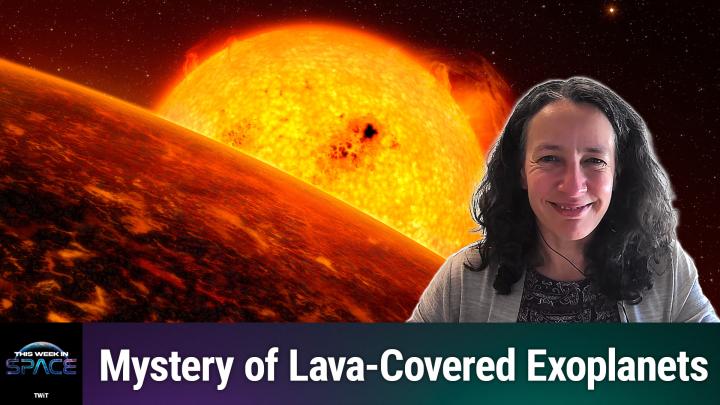
Coming up on This Week in Space, SpaceX finally reaches orbit with Starship. Google just put an AI data center in space. And what is the deal with lava worlds and their potential to have atmospheres and maybe life? We get down to brass tacks with Dr. Laura Schaefer, Associate Professor of Earth and Planetary Sciences at Stanford, who knows what's what. Check it out.
Rod Pyle [00:00:31]:
This is This Week in Space, episode number 230, recorded on October 2nd, 2026: Living on Lava Worlds. Hello and welcome to another episode of This Week in Space.
Tariq Malik [00:00:44]:
Space, space.
Rod Pyle [00:00:45]:
This Week in Space.
Tariq Malik [00:00:46]:
Space, space, space.
Rod Pyle [00:00:48]:
The Living on Lava Worlds edition. I'm Rod Pyle, editor-in-chief of Ad Astra Magazine, and I'm here as always with my old pal, older every year, Tariq Malik.
Tariq Malik [00:00:58]:
Funny how time works that way, right? Yeah, Rod. Happy, happy, happy podcast day. Happy, happy This Week in Space Day.
Rod Pyle [00:01:05]:
How you doing, fellow whitebeard?
Tariq Malik [00:01:07]:
I'm looking, looking, doing well. It's 86 degrees in October in New Jersey.
Rod Pyle [00:01:14]:
It's 100 here tomorrow. So, and it's, it's 95 in Long Beach, I think, last night, which is a beach town.
Tariq Malik [00:01:24]:
Yeah, yeah.
Rod Pyle [00:01:25]:
What's the deal? Well, we know what the deal is, but that's depressing, so we'll talk about something else.
Tariq Malik [00:01:30]:
I used to live there, right off of Broadway, you know?
Rod Pyle [00:01:33]:
Yes.
Tariq Malik [00:01:33]:
You know, yeah.
Rod Pyle [00:01:34]:
Yes, I do, I do. And lucky you lived there when you did so that you escaped with your life. Today we're going to be speaking with Dr. Laura Schaefer, who's a professor at Stanford University, about her team's work on extra-hot but atmosphere-rich exoplanets. And could they be harboring life of some kind? We'll find out.
Tariq Malik [00:01:55]:
Lava worlds, lava worlds.
Rod Pyle [00:01:57]:
Yeah, it's cool, grabby, clickbait headline territory.
Tariq Malik [00:02:02]:
Not cool, because they're lava worlds, right? So it's hot, hot, hot, hot off those presses, man.
Rod Pyle [00:02:09]:
I'm gonna spank you. But first, we have a space joke.
Tariq Malik [00:02:14]:
A joke!
Rod Pyle [00:02:16]:
Hey, Tariq.
Tariq Malik [00:02:17]:
Yes, Rod.
Rod Pyle [00:02:18]:
What did the extremophile psychologist on the molten exoplanet say to his patient?
Tariq Malik [00:02:23]:
Uh, I don't know. What?
Rod Pyle [00:02:25]:
Live, lava, laugh.
Tariq Malik [00:02:28]:
That's a good one. I love that. I love that. Or it could also be lava, laugh, love, right?
Rod Pyle [00:02:34]:
That's true.
Tariq Malik [00:02:35]:
And, uh, hey, that was a good one.
Rod Pyle [00:02:40]:
I'll have to take credit for that one. However, not credited to me, but unfortunately I lost the credit for it, is a joke from back in our first couple of months on this show, which I Wow.
Tariq Malik [00:02:51]:
Run.
Rod Pyle [00:02:51]:
Hey, sorry.
Tariq Malik [00:02:52]:
Digging through the archives. Yes, Rod.
Rod Pyle [00:02:53]:
What do you call a robot that changes the direction of a rocket in flight?
Tariq Malik [00:02:58]:
I don't know, what?
Rod Pyle [00:02:59]:
An R2-Detour.
Tariq Malik [00:03:00]:
That's a good one.
Rod Pyle [00:03:04]:
Sprung.
Tariq Malik [00:03:05]:
No, I think they're all great. They're all great.
Rod Pyle [00:03:07]:
I've heard that some folks want to divert us into terrain or dip us into magma when it's joke time in this show, but you can help by please sending us your best, worst, or most indifferent space joke at Twitter.
Tariq Malik [00:03:18]:
Gotta be better than these ones, right?
Rod Pyle [00:03:21]:
At twists@twit.tv. We'll be happy to credit you or blame you on the air depending on how it goes over. And now, ever onward and upward to headline news.
Tariq Malik [00:03:35]:
Headline news. I nailed that one. I know it.
Rod Pyle [00:03:41]:
You know, I feel very gratified that once a week I give you a chance to be something special.
Tariq Malik [00:03:48]:
To try to, because it's, I live for it.
Rod Pyle [00:03:49]:
I wake up, it's like, So the question is, you know, if we wake up in the morning and ask our families, am I somebody special? We'd never know what answer we're gonna get.
Tariq Malik [00:03:59]:
Tarik J. Malik does.
Rod Pyle [00:04:00]:
A roll of the eyes.
Tariq Malik [00:04:01]:
Yeah, my mama tells me so.
Rod Pyle [00:04:02]:
So, all right, Starship, Starship, Starship, Starship. What did they do?
Tariq Malik [00:04:09]:
Are made to fly, right? As Nicki Minaj said. And this week we talked about— we, we, we, we, this week You know, we talked about it last week. This week was the week. And yes, SpaceX launched Starship into orbit for the first time on Flight 14.
Dr. Laura Schaefer [00:04:28]:
Woo!
Tariq Malik [00:04:28]:
It was spectacular. You know, they had very little, they had very little that went wrong, but there was high drama in this launch because, well, just for someone who knows, they launched out of Starbase in South Texas like they normally do. This was their first morning launch and they almost didn't go to orbit. because they had one engine go out on the Starship upper stage, like the ship vehicle.
Rod Pyle [00:04:53]:
All right.
Tariq Malik [00:04:53]:
During the—
Rod Pyle [00:04:53]:
right.
Tariq Malik [00:04:54]:
Yeah, one of 6. It has 6 main engines, 3 vacuum, 3 primary. And one of the vacuum engines went out on the way up. So they burned the other engines for longer. And then they got into their coast phase. And they even announced publicly that they had called off the orbit because of that one engine. I mean, everything was fine. They just, you know, they have to restart the engine.
Tariq Malik [00:05:15]:
2 more times because— or the engines 2 more times because they have to go into orbit, then they have to leave orbit, and then they need to do all like the maneuvering for landing. So they were worried about that. They got an issue with this engine. So Dan Hewitt, former NASA communicator and now SpaceX communications, goes out and says, okay, that's it, we're not going to do it. We're not going to go to orbit. It goes out wide. And then like within 5 minutes, they're like, nope, nope, we're gonna try. So that's like your sporty, steely-eyed rocket people over there saying, saying, we're gonna, we're gonna do it anyway.
Tariq Malik [00:05:49]:
And, and they did it. They, you know, the 12-second burn, they got into orbit, they orbited the Earth 2 times. They were gonna try for 6 orbits, but because of the engine dropout, they decided to just go a little bit conservative. They go the 2 orbits and they landed in their Northern Pacific drop zone. So a different spot when they were gonna be targeting for the 6th one. And Everything else, I mean, they lost a couple engines on the Super Heavy, so you still don't want to see that because that impacts your turnaround time eventually. One engine on the way up and then a couple on the way back down. They did do the soft landing in the Gulf of Mexico for the first stage.
Tariq Malik [00:06:25]:
That went off according to plan. They did the soft landing of the ship as well. Longest Starship mission to date. And they deployed 26 V3 Starlink satellites into orbit, Rod, which means it's there. It was an operational flight. They deployed a payload in orbit.
Rod Pyle [00:06:44]:
Which is, we should mention, because they're much larger and heavier than the old— the older Starlinks, it's the equivalent of, what did they say, 10 Falcon 9 launches?
Tariq Malik [00:06:51]:
Yeah, they're, they're, they're huge, these satellites. And, and it was, it was spectacular. And I was really stunned, both at how relatively smooth— I'm gonna say relatively, because that was really sporty about That engine outage and the call there, because they didn't have a lot of time to make that call. But it tells you that for like 5 minutes, SpaceX was ready to eat all 26 operational Starlink satellites, right? They're going to say, okay, we're not going to go to orbit. We're just not going to deploy these satellites because they would fall out of space anyway. They're not in orbit. So we'll just let them stay on and burn up. And then they stayed aboard and they stayed, they stuck with it.
Tariq Malik [00:07:30]:
deploy the satellites in orbit. They're up there now.
Rod Pyle [00:07:33]:
You know, I wonder if their concern was that they might not make it all the way to a proper orbit, or if their concern was both for trying to decide whether to press to orbit and how long to stay there. If the concern was, you know, we're having sufficient trouble with these Raptor engines— the Raptors, right?
Tariq Malik [00:07:53]:
Yeah. Yeah. Yeah.
Rod Pyle [00:07:54]:
That we're concerned the thing might get stuck there. And I wonder if that's why they brought it home early.
Tariq Malik [00:07:59]:
It is actually why they didn't try going into orbit before too, because, you know, for all intents and purposes, this flight was very similar to almost every other Starship launch that, like, of recent, like in the last couple years, where they go, they launch up, they go all the way up because the burn to go into orbit was like 12 seconds. It was hardly anything at all, just like one extra nudge. They could have done it in the past, but they want to make sure they can rely on these engines. Starship is something like 200, 120— it's bigger than the Space Shuttle, the actual ship itself, right? This 400 feet end to end with the first and second stage. I think it's 221 feet long. Don't quote me on that, though. I'd have to go back and check. So I think it's like twice as big as the Space Shuttle.
Tariq Malik [00:08:40]:
It's a huge thing to get stuck up there. And not only—
Rod Pyle [00:08:43]:
Unexpectedly.
Tariq Malik [00:08:44]:
That's the thing. And come down unexpectedly, or to like, let's say you go into orbit, And you've got an engine you're not sure of, then when you have to do your landing burn and slow down, then it's not going to be a success, right? Because you don't— you're going to stress things out too much. So, so that's kind of why they were conservative there. But it all went overall, you know, mostly to plan. So a huge leap for Starship. They put the largest rocket ever built, the most powerful rocket ever built, into orbit. And that is a feat. You know, it's 10 years of development led to that moment.
Tariq Malik [00:09:23]:
And now, hopefully, they're off to the races for the foreseeable. They have to demonstrate in-space fueling, they have to do docking in space, they have to do reusable flights, they have to just keep flying more and more, you know, stay in orbit for longer and longer periods of time. So we're gonna have to see how that's all going to evolve over the next few months.
Rod Pyle [00:09:43]:
So it's 171 feet.
Tariq Malik [00:09:46]:
171 feet. There you go. The space shuttle's 121 feet.
Rod Pyle [00:09:50]:
And 120 metric tons. So I think, let's see, what was the— sorry, I just got to look something up here because I'm—
Tariq Malik [00:10:03]:
Yeah, so Rod is looking up some of the stats for you.
Rod Pyle [00:10:05]:
So it's a little bit less than Skylab, but still a big heavy thing to come crashing down on your head unexpectedly if you aren't able to survive.
Tariq Malik [00:10:12]:
As an upper stage. As Skylab was a space station.
Rod Pyle [00:10:14]:
As the upper stage.
Tariq Malik [00:10:15]:
Yeah, it's 20 tons more than the Space Shuttle, which is 100 tons.
Rod Pyle [00:10:18]:
So you need, you need those engines to work in a vacuum to bring it back.
Dr. Laura Schaefer [00:10:22]:
Yeah.
Tariq Malik [00:10:22]:
Yeah.
Rod Pyle [00:10:22]:
Okay.
Tariq Malik [00:10:23]:
Very, very— we got— and you have more— expect more test flights.
Rod Pyle [00:10:27]:
Expect you have a little tag here that says, oh my God, the views. Did you want—
Tariq Malik [00:10:30]:
Oh yeah. Yeah. Should we show John? Can we show the views here in this, in this, this video that we've got on the next line?
Rod Pyle [00:10:38]:
Line 22. Somebody wake up John. There we go.
Tariq Malik [00:10:43]:
So, so these are views—
Rod Pyle [00:10:44]:
That bent rocket, that's cool.
Tariq Malik [00:10:46]:
This— well, these are views from the, the Starlink satellites as it backed away from the Starship because it was daytime. They launched it in the daytime, and so they were able to see it. And it's just— it looks something like out of science fiction, you know. You can see the little— there's a black line in this image for people watching it That's the actual kind of Pez dispenser slot that these flat satellites pop out of, bip, bip, bip, bip, bip, over time. And, and they actually did it a little slower than they did on past flights because they're in orbit now. So they can, they can, they don't have to rush to get the satellites out to do the demo.
Rod Pyle [00:11:24]:
Oh, interesting.
Tariq Malik [00:11:25]:
So yeah, yeah, because before they had to get them out so they would, they would reenter quickly and they wouldn't have a collision risk with the spacecraft. But now they took their time. And the weird part was, and we don't see them in these images, But if you watch the video feed, you would see this line of dots in the background. First, it was like above or below Starship, and then it was above Starship. So it was the Starlinks they had just deployed, and you can see them in the background the entire time. It was crazy. So very, very good. Very good.
Tariq Malik [00:11:59]:
Very good flight for them. And expect more. I've heard that they were hoping to launch 2 more times in October alone. So we should get some more flights before the end of the year.
Rod Pyle [00:12:08]:
All right. Let's go on to our next story, which is the first Google data center is launched. And now we begin to look overhead and worry, right?
Tariq Malik [00:12:19]:
I, for one, welcome our robot overlords in space, right?
Rod Pyle [00:12:22]:
You can have them.
Tariq Malik [00:12:25]:
But so this is really interesting. SpaceX launched a transporter. They had a really big day. I didn't put it on the list. But Yesterday, the day before we're recording this, was the Crew-13 launch day. SpaceX launched 3 different missions within 13 hours, 2 of them from Florida.
Dr. Laura Schaefer [00:12:40]:
Wow.
Tariq Malik [00:12:41]:
Yeah. And, and one of them, well, one of them was Crew-13. That was the first one. And then they launched Transporter-18 out of Vandenberg. And that carried 130 different small satellites into space. And one of them was this new Google AI satellite. It's a data center that's going to be in space to kind of prove out that concept that you can have them up there. So it's not very large.
Tariq Malik [00:12:59]:
Because these Transporter-18, these Transporter missions are small, like either nano or mid-range satellite type things. And this was really interesting to see how that the whole AI kind of boom is now reaching into orbit. This is part of Google's Project Suncatcher. It's an AI constellation that they're building, and they want to operate in low Earth orbit. And they want to use this satellite to understand— and this is okay, I'm going to use some like Google speak— understand how tensor processing units— I guess those are the Google chips that are at the core of the Suncatcher data center— actually work in the space environment. So like, can they withstand space radiation? How do they deal with the heat and all of that? And, and this is the first big foray, you know, SpaceX is planning to build a whole constellation of data, data centers in space. And everyone is looking up there because, you know, you've got this, the Sun for free power, for the most part. And you don't have to use the water, you can just use the vacuum of space for cooling.
Tariq Malik [00:14:04]:
And, and hopefully it doesn't, you know, ruin the environment because it's all up there. So, and it's begun, the space race for AI is fully underway, Rod.
Rod Pyle [00:14:15]:
Oh, boy. Apparently, it was built by Planet Labs for Google or with Planet Labs for Google. So that's a good choice because they have experience with these things.
Tariq Malik [00:14:25]:
And Planet Labs is like, like rock solid when it comes to small satellites in low Earth orbit.
Rod Pyle [00:14:29]:
But it's still, according to what I'm looking at anyway, about the size of a small refrigerator. So it wasn't tiny. It wasn't huge. I mean, it wasn't what they're going to be in the future, but it wasn't huge.
Tariq Malik [00:14:39]:
Yeah. I will point out that there's another, there's another company called Cowboy Space.
Rod Pyle [00:14:42]:
Yeah.
Tariq Malik [00:14:43]:
That also put up an AI data center. on Transporter 18, they call it Reason One. So, you know, and they want to do power beaming to help power these things.
Rod Pyle [00:14:54]:
And this was 1 kilowatt. So yeah, they got a ways to go. But this is, this is where it starts. And, you know, for whatever misgivings we might have for the astronomers on Earth, getting data centers off the planet can't be a bad thing. Because I still Myself and a lot of people scratch our heads when we hear they're being built in places like Arizona and Utah where water is scarce and it's already hot. But, you know, the overlords have their reasons. Okay, let's move on. Happy New Year's on Mars.
Rod Pyle [00:15:25]:
Go for it.
Tariq Malik [00:15:26]:
It's a new year on Mars, everybody. We should all celebrate because the Red Planet has completed another circle around us, right? I love it. I love it. On September 30th, So yesterday, as we're recording this at 4:16 AM Eastern Time, 8:16 GMT, the Red Planet completed its 687th Earth day trip around the Sun. And that is great. So I don't know if there were any parties on Mars, what the rovers were doing. But I thought that we would celebrate the Martian New Year with a great podcast with you, Rod. So actually, I said yesterday, yesterday was October 1st.
Tariq Malik [00:16:08]:
So the day before, it was like 2 days ago. I forget what day it is.
Rod Pyle [00:16:14]:
Susabella!
Tariq Malik [00:16:14]:
Speaking about birthdays, it was also a friend of the show's, uh, uh, Mike Wall's birthday yesterday, as well as friend of the space, NASA's birthday yesterday on October 1st. So—
Rod Pyle [00:16:25]:
Oh, oh, 1958, you mean?
Tariq Malik [00:16:26]:
That's right, that's right.
Rod Pyle [00:16:28]:
Uh, NASA's younger than me, isn't that?
Tariq Malik [00:16:30]:
Is that right?
Rod Pyle [00:16:31]:
Yeah, I was born in 1956.
Tariq Malik [00:16:33]:
I'll tell you, I'll tell you, you don't look— you don't look a day over the European Space Agency.
Rod Pyle [00:16:37]:
Day over 90. Okay, thank you for that.
Tariq Malik [00:16:40]:
All right, that was a good one, everybody.
Rod Pyle [00:16:42]:
By the way, By the way, for anybody who cares about such things, I just got a text that I will be on Coast to Coast AM on Monday, October 19th at, uh, I guess it's midnight Central Time or something.
Tariq Malik [00:16:59]:
Yeah.
Rod Pyle [00:16:59]:
I don't remember what their, what their time scale is, but yeah, it's, uh, so the first hour is always conversation. The second hour is calls.
Tariq Malik [00:17:07]:
Ooh, I gotta call in. Call and talk to me and ask a question. And my favorite question ever.
Rod Pyle [00:17:11]:
So the first hour, you know, we talk about science and stuff, and, you know, we kind of agreed we're not going to talk about little green guys and ghosts in space and that kind of stuff, which is fine, you know, because that show is a very broad spectrum, but we kind of keep it focused on cool space stuff. But in the hour for the call-ins, you get some really interesting calls. And, and I mean, some of them really are interesting. Some guy driving a truck across Tennessee. 2 in the morning in his time zone or whatever. My favorite one was a woman, I think I've talked about it on the show before, who called in and said that she had seen a very bright light over her house. It was hovering about 70 feet above her roof and speaking to her in the soothing, dulcet tones of Buzz Aldrin.
Tariq Malik [00:17:54]:
Uh-huh.
Dr. Laura Schaefer [00:17:54]:
Wow.
Rod Pyle [00:17:55]:
And, if you've ever spent time talking to Buzz, those are not soothing tones. At least they weren't back in the day. Very smart, but it's He's not gonna, gonna give you soothing tones.
Tariq Malik [00:18:04]:
So I can, I can call in, I can say, hi, I got a question for Mr. Rod Pyle. Yes, yes, what's your question? And I'll say, hey Rod, is your Hubble telescope running? And then you'll have to say yes. And then I'll say, you better go and catch it. That's— I got a million of them, everybody. I got a million of them.
Rod Pyle [00:18:19]:
Okay, you can show yourself out. We will be back shortly with Dr. Laura Schaefer of Stanford University to talk about hellish exoplanets. So stick around. And we are back with Dr. Laura Schaefer, who is an associate professor of Earth and Planetary Sciences at the Stanford Doerr School of Sustainability, which was previously Stanford Earth. Did I get that right?
Dr. Laura Schaefer [00:18:42]:
That's right, yes.
Rod Pyle [00:18:43]:
Okay, good.
Tariq Malik [00:18:43]:
Welcome, welcome, welcome.
Rod Pyle [00:18:45]:
So, uh, she went to grad school at the Harvard-Smithsonian Center for Astrophysics, got a PhD in astronomy in 2016. Congratulations. Both Tariq and I aimed for that and failed miserably. Well, we have her bachelor's degrees in science claimed out there.
Tariq Malik [00:19:01]:
You have a bachelor's degree in science. Mine is in the arts.
Rod Pyle [00:19:06]:
Her thesis work focused on volatile cycles on rocky exoplanets. This is a hell of a specialization. Metal silicate differentiation and atmosphere formation, which I kind of doubt when you were doing that degree, there was a whole lot of literature out there on those topics, was there?
Dr. Laura Schaefer [00:19:25]:
There's been a history of work on the formation of the core on Earth, but we've been starting to push that into the realm of exoplanets and planets bigger than Earth just in the last 15 to 20 years as the population of exoplanets has really exploded.
Rod Pyle [00:19:44]:
Well, that's exciting. I do— Tariq has a question he's burning to ask, but I have a somewhat tangential one. Which you may or may not know the answer to. Will the Stanford Dish ever get used for anything scientific again, or is it just kind of a relic now?
Dr. Laura Schaefer [00:19:59]:
I believe it does get used relatively frequently, and it's used for studying mostly the sun, for solar science. Yeah.
Rod Pyle [00:20:08]:
Okay. Well, if you're ever in that neighborhood, it's a great short climb up a hill to this wonderful old radio telescope.
Dr. Laura Schaefer [00:20:15]:
Yeah, it's a very nice little hike. Yeah.
Rod Pyle [00:20:17]:
Yeah, yeah, yeah. At the back of the 8,800-acre Stanford campus. All right, Tariq, you're up.
Tariq Malik [00:20:23]:
I was gonna say, is that better than going to Mount Wilson for USC, where we also studied the Sun with Dr. Ritz?
Rod Pyle [00:20:28]:
Anything's better than doing something with USC. Just saying.
Tariq Malik [00:20:31]:
Well, yeah, well, uh, uh, Laura, yeah, I do want to ask, because I typically try to ask everybody at this part of the, the, the discussion about how you found your way into like space and science and the study at all? Is it something that when you were a kid that you were like, yes, I'm going to get into astronomy or space somehow? Or was it, as has happened with some of our guests, a happy kind of discovery that you made along the way as an adult or later on?
Dr. Laura Schaefer [00:21:05]:
Yeah, it was, it was the second actually. As a an undergrad student, I actually started off as a physics major, and I made it to my junior year and electricity and magnetism, I was like, this is not for me.
Tariq Malik [00:21:20]:
No, no.
Dr. Laura Schaefer [00:21:23]:
And I switched at the time. I switched my majors then to Earth and Planetary Science. So I had sort of been waffling back and forth whether I wanted to do physics or chemistry. And I was like, well, I could do Earth and Planetary Science. They do both of those things. And then they study real planets, outer space. I was always kind of a science fiction nerd growing up. I watched a lot of Star Trek and Star Wars with my dad.
Tariq Malik [00:21:49]:
We don't like Star Trek on this show, so. What are you talking about? I was pointing at my chair.
Dr. Laura Schaefer [00:21:56]:
Oh, okay.
Tariq Malik [00:21:56]:
Yes, yes.
Dr. Laura Schaefer [00:21:58]:
Yeah, I grew up on The Next Generation, right? So we spent a lot of time watching that. Yeah, and so I sort of stumbled into Earth and planetary science in my undergraduate major, and I took a couple of classes with a faculty member at my undergrad institution, WashU in St. Louis, and he offered me a job working for him. And so initially that was just doing sort of like grunge work, like he was trying to build a database. So my job was to go to the library and photocopy a bunch of articles and then come back and enter the data into the database.
Tariq Malik [00:22:34]:
I know that job very well.
Dr. Laura Schaefer [00:22:36]:
So not super exciting. But, you know, I did well in his classes. So he's like, well, okay, so now do you wanna do some actual research with me? And so I did do that. And in fact, I stayed and I did research with him for 9 years before I went to grad school, actually.
Tariq Malik [00:22:52]:
Wow.
Dr. Laura Schaefer [00:22:53]:
So he was a cosmochemist, studied essentially the chemistry of meteorites and the stuff that has stuck around since the time of planet formation. And I was working with him doing a lot of theoretical modeling to look at sort of the chemistry that's happening during planet formation and the early atmospheres of planets. And to tell you how old I am, this was around the time when the Kepler mission first launched and started finding a lot of exoplanets.
Tariq Malik [00:23:24]:
Yeah.
Dr. Laura Schaefer [00:23:25]:
And at that time, I was like, that seems like a really cool field. I should get into that. And so that was when I ended up applying for grad schools, and I wanted to work on exoplanets. So I ended up actually applying to astronomy departments because that's where most of exoplanet science was at the time, even though I didn't have any astronomy background. So that's how I ended up at the Harvard Astrophysics Department. And yeah, I continued doing, you know, building on my background in sort of thinking about how planets form and the chemistry of that process and then moving more into studying how that might happen for exoplanets and how they evolve over long time periods. So yeah, so that's how I got into that.
Tariq Malik [00:24:13]:
That's amazing.
Rod Pyle [00:24:14]:
So I love this, Tariq. Electronic engineering is a little too hard. I'm going to go do astrophysics on exoplanets because that's easy or something. Okay, so what was your favorite episode of Next Generation? I must know.
Dr. Laura Schaefer [00:24:29]:
Oh, gosh. I think it's got to be the one where Picard is stranded on the surface with the alien and they're only speaking in the stories.
Tariq Malik [00:24:45]:
Simba, his arms wide.
Dr. Laura Schaefer [00:24:49]:
Yes, his arms wide.
Tariq Malik [00:24:50]:
His arms open.
Rod Pyle [00:24:51]:
That's not the one where he lives a whole life in a chair?
Tariq Malik [00:24:55]:
That's the flute one. No, also a good one.
Dr. Laura Schaefer [00:24:58]:
That's also a good one. But yeah.
Rod Pyle [00:25:00]:
Wow, I liked conspiracy myself. Okay.
Tariq Malik [00:25:03]:
By the way, we should point out, Laura, that Rod worked on Star Trek: Deep Space Nine.
Rod Pyle [00:25:08]:
I did.
Dr. Laura Schaefer [00:25:08]:
Also a good show.
Rod Pyle [00:25:09]:
I was on the very bottom rung of the special effects ladder and got to clean and position the little spaceships. Okay, that was embarrassing. Thank you, TARC. We've been looking at exoplanets for over 30 years if you count from the first detection. And as I gather, the easiest ones to spot early on anyway were the very big ones that were very close to their star because they have shorter orbital periods, and then you can, you can catch the light dipping as they go across the front of the host star, right?
Dr. Laura Schaefer [00:25:42]:
Right, that's right. So yeah, so actually the first detection was not with the transit method, which is where you see the light dipping. It was with another method called radial velocity that's sensitive to the mass of the object. And so there, what we're seeing actually is the orbital motion of the star. We can measure the velocity of the star moving towards and away from us as it's orbiting like the common center of mass with the planet.
Rod Pyle [00:26:07]:
Okay, so the star kind of shudders basically.
Dr. Laura Schaefer [00:26:09]:
Yeah, exactly.
Rod Pyle [00:26:10]:
The planet's tugging on it, okay.
Dr. Laura Schaefer [00:26:11]:
Yeah, so still that one, that method is most sensitive to really big planets and ones that are close to it. And yeah, we found like these weird planets, hot Jupiters that we didn't expect to exist. In fact, my PhD advisor tells me that when he first heard about the detection of 51 Peg b, b, which was the first planet announced, he originally thought it has an orbital period of 5 days. He originally thought somebody said 500 days and he thought that was absurd. And then he heard it was 5 days and he said he fell out of his chair laughing. He's like, that's not a planet.
Tariq Malik [00:26:50]:
That's not a planet.
Dr. Laura Schaefer [00:26:51]:
But then it turned out it is like, and so we had to revise all of our models of planet formation to figure out how did, how did these planets get there?
Rod Pyle [00:26:59]:
Well, and just when you get comfortable with that, somebody comes along with her team and says, hey, I know these planets shouldn't have any atmospheres, but guess what? So there's a whole story there that we're looking forward to. But I think because that's probably the core of what we're going to talk about, John, why don't we orbit ourselves into a break early? Oh, that really stunk. And we'll be right back. So don't go anywhere. So the conventional thinking for a long time was these planets, especially if they're rocky planets close into a star, are going to have their atmosphere scoured away like Mercury did, for instance. But apparently that's not the case. Tell us your story.
Dr. Laura Schaefer [00:27:41]:
Yeah, so there's a model that came out in 2017. It's called the cosmic shoreline. And the idea here is that They were trying to predict which of the smallest exoplanets should still have atmospheres. And so what they were looking at was actually an empirical sort of scaling law that they derived from the solar system. So they looked at all the planets and moons and small objects in the solar system, and they said, what sort of separates the objects that have atmospheres from the ones that don't? And it appears that it is some function of gravity. So the and scales with the escape velocity from the atmosphere. So the bigger the object, the more energy gas has to get in order to escape from the planet. And the other thing it seems to scale with is the amount of high-energy radiation that object receives from its— from the Sun in the solar system.
Dr. Laura Schaefer [00:28:37]:
And that's things like X-rays and ultraviolet radiation. And we think those are important because what happens is that they hit the top of the atmosphere and warm the gases in the upper atmosphere layer, And if we— if that atmosphere is receiving enough of that radiation, it heats it hot enough that that gas can escape. It gets a velocity higher than the escape velocity if it gets really hot. So we think that, you know, objects that are closer to the star are going to receive a lot more of that radiation just from geometry. And so they applied this sort of scaling law, which they called the cosmic shoreline, to exoplanet systems and said, well, we have this line in sort of escape velocity versus stellar radiation space. Anything below that line should have an atmosphere and anything above it shouldn't. So you're receiving too much high-energy radiation, it's going to drive all of your atmosphere to escape. And so that prediction says that in fact most of the small rocky exoplanets that we have found so far are probably don't have atmospheres.
Tariq Malik [00:29:51]:
Which doesn't sound great, right, for the search for life if it doesn't have an atmosphere.
Dr. Laura Schaefer [00:29:55]:
Right.
Tariq Malik [00:29:56]:
I mean, yeah, not a great place for a club, but also not a great place, right, to look for little, little green creatures and stuff.
Dr. Laura Schaefer [00:30:03]:
Yeah, exactly. And so this is— this has been especially a problem because most of the— most of the small planets that are— that have strong enough signals or like big enough sizes relative to their star that we can actually if they had an atmosphere, we would, we would be able to detect it, are orbiting really small stars. And the problem with really small stars is that they have more of their light is emitted in these high-energy wavelengths that are damaging to the atmosphere. And the other thing is that in order for a planet to be in the habitable zone of these small stars, they, they also have to be really close to that star because the star is colder, smaller. And so in order to get enough sunlight to be like nice on the surface, you have to be really close to the star. And so all of these things sort of indicate that these small planets around small stars probably don't have atmospheres. And so one of the big programs that the James Webb Space Telescope has been undertaking since it launched back in 2021, right?
Tariq Malik [00:31:09]:
Christmas Eve.
Dr. Laura Schaefer [00:31:11]:
Is that it is trying to find atmospheres on small planets. It's doing this through a detection technique called a secondary eclipse, where the planet— if this is our star, transit is when the planet goes between you and the star, and secondary eclipse is when the planet goes behind the star. And then we lose the light from the planet itself. And so we can try to measure a temperature. of those planets, get an idea of how hot the day side of the planet is. And what happens is if that planet has an atmosphere, the day side should actually be colder than it would be without an atmosphere because the atmosphere is actually moving a lot of energy around to the night side. And so we get different secondary eclipse depths if the planet has an atmosphere. And so far, All of the cooler rocky planets don't seem to have atmospheres.
Dr. Laura Schaefer [00:32:10]:
There's a few that have like hints of maybe like Mars-like atmospheres, but most of them seem to be consistent with, with being bare rocks. Except we found out that the hottest planets do seem to have atmospheres.
Tariq Malik [00:32:27]:
And this, I think, is where we come to the study that you and your team have published in the Astrophysical Journal Letters, which is all about my favorite planets and Darth Vader's lava worlds, right? And that's right. How they can— how they can— Darth Vader's base is on Mustafar.
Dr. Laura Schaefer [00:32:44]:
It's a lava world.
Tariq Malik [00:32:45]:
That's where he lost it. That's for our listeners. They may not know, right, Rod? Right.
Rod Pyle [00:32:51]:
But whatever you say, Tariq.
Tariq Malik [00:32:53]:
But, but, but so, so this was really exciting because Everyone loves lava worlds because they're like crazy primordial Earth, but it's like everywhere. And, and why focus on, on that? What did you have clues to pin in on that? Or was it a surprise that led you there?
Dr. Laura Schaefer [00:33:11]:
So these planets are hot enough that, that essentially rocks should actually be vaporizing at their surface if, if they have like a nice surface that you could see. What's a, what's a, what's a temperature range for like rock to Yeah, so on Earth, lavas that come out of volcanoes have temperatures of around— let's say, I'm going to say this in Kelvin because that's the temperature range I understand— have temperatures of around 1,000 to 1,200 degrees Kelvin. These planets have temperatures of around 2,000 degrees Kelvin.
Tariq Malik [00:33:48]:
Oh my God.
Dr. Laura Schaefer [00:33:48]:
So 800 degrees hotter.
Rod Pyle [00:33:51]:
So 1,200 degrees Kelvin, just for anybody who's tracking is 1,700 degrees Fahrenheit.
Dr. Laura Schaefer [00:33:56]:
Yeah.
Tariq Malik [00:33:57]:
It's a hot day.
Dr. Laura Schaefer [00:33:58]:
It's pretty hot.
Tariq Malik [00:34:00]:
I thought it was hot in October here.
Rod Pyle [00:34:01]:
The worst in California this week. Yeah.
Tariq Malik [00:34:04]:
Yeah.
Dr. Laura Schaefer [00:34:05]:
So it's extremely hot on their surfaces. And so we do expect them just to be sort of a— have lava present at the surface at all times on these planets. And it turns out this is one of the processes that my group has been studying for a long time is magma, what we call magma oceans. So in our group, we study those both in the solar system and for exoplanets. In the solar system, we think most of the rocky planets went through a magma ocean stage when they were first forming. Earth had a magma ocean, but it only lasted like 2 or 3 million years before the planet solidified and then turned into the habitable planet we see today. So we think this is a common phenomenon that most rocky planets probably go through. It's just that these exoplanets that end up really close to their stars just never get out of it.
Dr. Laura Schaefer [00:34:57]:
So they're in this permanent magma ocean stage for their whole life.
Tariq Malik [00:35:01]:
Because they stay so hot, so they can support it.
Dr. Laura Schaefer [00:35:03]:
Because they stay so hot. Yeah, and so one thing, one of the important things about a magma ocean is, so we've got this big ball of molten rock. It turns out that all of the things that usually make up our atmosphere or our surface here on Earth, things like water and carbon dioxide and nitrogen, they can actually dissolve into that liquid rock to different levels, actually. And so the atmospheric pressure is determined by the balance between the dissolution of those gases in the liquid rock and the pressure at the surface. So what we think is happening for these exoplanet systems is that those planets that are close to their star, they're in this liquid state. And those gases are partially in the atmosphere. But in fact, because most of the volume of the planet is liquid rock, most of them actually get dissolved into that liquid rock.
Tariq Malik [00:35:58]:
Mm-hmm.
Dr. Laura Schaefer [00:35:59]:
So the atmosphere is getting blasted away. They are losing a fair amount of atmosphere, and eventually they'll probably lose their entire atmosphere. But they have this reservoir that they manage to retain a lot of volatiles trapped in this liquid rock. And as the atmosphere gets stripped off, it just outgasses a little bit more.
Tariq Malik [00:36:19]:
So, so it's kind of like a one— let me know if I get this right, because I'm very— I don't understand like a lot of basic things. But it's— I know like how the water cycle sustains our atmosphere on Earth, and this sounds like a magma version that just— it keeps going out, like a one-way version where it keeps spitting it out to like keep filling up the tanks, if you will.
Dr. Laura Schaefer [00:36:39]:
That's right. So, you know, so imagine like, like a bottle of soda, right? You have CO2 dissolved in the soda and that, that little top layer that's empty, it's full of CO2 gas and it's kind of right at equilibrium. And if you open it a little bit, some of that CO2 will leak out and then you'll get some bubbles that form as more of that CO2 basically comes out of the solution of the soda. And so that's sort of what is happening is we're slowly like unscrewing that bottle cap and the atmosphere is leaking out because of the star. But the liquid is constantly sort of replenishing that little reservoir there with gas.
Tariq Malik [00:37:24]:
Wow.
Rod Pyle [00:37:25]:
All right, well, let's drop a couple of Mentos and fizz our way into a break and we'll be right back, so stay with us. So part of your work has been to refine and I think redefine the whole idea of the cosmic shoreline and the cosmic sandbar. Can you talk about those a bit? 'Cause those are very cool science fiction-y terms for us.
Tariq Malik [00:37:45]:
And that's where we have the graphic for this one, John, on line 59, so.
Dr. Laura Schaefer [00:37:51]:
So yeah, so the cosmic shoreline is that line that we had thought, you know, all the planets under that line might keep their atmospheres, all the planets above it probably lose their atmospheres. And so this is true for most of the planets we have found around small stars. And we think planets that are cooler and further away from their stars, they're far enough away from that damaging XUV radiation that they could keep atmospheres over long timescales. So these are planets that— those kind of planets might eventually be habitable, and we might be able to find eventually life on those planets if they are inhabited. But But this innermost region where we have these hot rocky planets that are so close to their star that they're constant balls of lava, we think that defines a new regime that we're calling the sandbar. So this is the region where these hot planets, we've discovered a handful of them so far, seem to be retaining their atmospheres, mostly because they remain in this liquid lava state for a really long— billions and billions of years. And so it is the liquid reservoir that is resupplying the atmosphere that allows them to maintain an atmosphere over long timescales. And the planets in between these 2 regions, we're calling the airless valley now.
Dr. Laura Schaefer [00:39:19]:
So these are the planets that are a little bit further away from their star. And so as a result, they're cooler. And what actually happens is that they crystallize So the lava solidifies and they become solid planets. And that unfortunately is bad.
Tariq Malik [00:39:37]:
Oh no.
Dr. Laura Schaefer [00:39:37]:
In this case, because they're still getting enough of that XUV radiation to strip the atmosphere off. But what has happened now is that the solid layer of rock doesn't hold on to those volatiles to the same extent that the liquid rock does. So, you know, Yeah, imagine, I guess, if you freeze a bottle of soda and then you unfreeze it, there's no more CO2 left in that, right?
Tariq Malik [00:40:04]:
Yeah, yeah.
Dr. Laura Schaefer [00:40:05]:
It's all escaped away. So the liquid lava holds on to volatiles, but as soon as it solidifies, it essentially outgasses all of those volatiles into the atmosphere. But again, they're receiving all of that damaging XUV radiation, and that scours the atmosphere away from these planets. So we have then these 3 regimes that we think exist in the planet population then. So we've got the cosmic shoreline planets, the ones that are further, far enough out that can keep an atmosphere. We've got this airless valley where they solidify and then they just lose all of their atmosphere. And then we've got the sandbar where we have another region where there are atmospheres, and that's because they're too hot, actually. It's sort of counterintuitive, but yeah.
Tariq Malik [00:40:50]:
And you mentioned Mercury as an example of an airless valley kind of world.
Dr. Laura Schaefer [00:40:54]:
That's right, yeah.
Tariq Malik [00:40:56]:
Just for our listeners to kind of get an example of that.
Dr. Laura Schaefer [00:40:59]:
Yeah, so Mercury, most of the rocky exoplanets we have found are actually considerably closer to their stars than Mercury is, right? Mercury is the hottest planet we have, but almost all of the rocky exoplanets we know of are hotter than Mercury. But yeah, Mercury is a great example of an airless valley kind of planet.
Rod Pyle [00:41:20]:
Now I've heard that many people want to send us to an airless valley when it's joke time on this show. Oh, I'm sorry, wrong segment. If you haven't listened to the show, we do a space joke at the very beginning, which they're usually groaners. So one of the articles I was reading was saying that this can be viewed as a move from follow the water to follow the atmosphere. Uh, you know, referencing back to NASA's long-term, well, since Pathfinder basically, Mm-hmm. idea of, you know, follow the water on Mars and maybe we'll find fossilized life or even extant life. So if we're talking about follow the atmosphere, besides the understanding that you're gaining from your work, is this also partially based on what we're learning about how extreme— extremophiles can actually be now?
Dr. Laura Schaefer [00:42:12]:
So, yeah, so the planets we've got in the sandbar are definitely going to be way too hot to ever host life. We are still hoping to find some planets and some mechanism that might help give atmospheres back to those planets in the airless valley. So maybe later volcanic outgassing might be able to temporarily replenish their atmospheres, because unfortunately many of the planets we've found around the smallest stars would be in that airless valley, even in the habitable zone. But the planets that we're probably looking for with the next round of space telescope, the Hubble Worlds Observatory, those planets should be outside of the cosmic shoreline, and so they should be able to retain their atmospheres. So hopefully we'll be able to find some of those planets that end up both keeping their atmospheres and therefore keeping their water on the surface, which would allow them to maintain a habitable atmosphere. We think you can't really have liquid water on the surface without some kind of atmosphere to prevent it from just evaporating away constantly.
Tariq Malik [00:43:25]:
I guess that was kind of like our next question was, does this fundamentally change what a Goldilocks zone is? in looking for kind of target planets that hold that promise of some kind of life support system, be it like, you know, liquid water or an atmosphere? Or do we now have kind of 2 different measuring sticks about what type of like exoplanet, like what kind of atmosphere it can have? Like we would have this Goldilocks zone that's like, you know, right now it's a nice fall day, There's like liquid water and rivers and lakes and all sorts of fun stuff. And then you would have the hot kind of shoreline ones that have an atmosphere. Maybe they have weird liquid lava and— but not a great place. Or is there like a mush-up between the two, like a border zone? Yeah, they can tip one way or the other.
Dr. Laura Schaefer [00:44:16]:
I think what we're going to look for is sort of the intersection of those cosmic shoreline planets with the, with the Goldilocks zone. with a habitable zone of their stars. And so I think what this is— what the cosmic shoreline is gonna do is sort of basically put a bound on the lower end of stellar environments, lower mass stars.
Tariq Malik [00:44:39]:
Mm-hmm.
Dr. Laura Schaefer [00:44:40]:
That just probably won't be able to support habitable environments, at least in the traditional surface water sense, right? There's always the possibility for other kinds of environments, like sub, you know, sort of water worlds of like the Europan type, you know, where you have the ice layer. Subsurface stuff. Yeah, subsurface stuff. So you have an ice layer and then you have an ocean under that. And that's gonna probably be possible further out, even around the smallest stars. So, but there might be a lower boundary for stars where You know, we need to look at planets that are orbiting stars bigger than that in order for them to be both in the habitable zone and beyond that cosmic shoreline.
Rod Pyle [00:45:27]:
So is the— if there's a tipping point between the magma outgassing feeding the atmosphere and the atmosphere being stripped away, is that more a function of the evolution of the star or something that's actually going on with the planet itself?
Dr. Laura Schaefer [00:45:42]:
It's kind of a combination of the two. The other factors that we looked at with this cosmic sandbar model include the initial, sort of the initial volatile budget of the planet, like how much water and CO2 and hydrogen did that planet start with in the first place, and the size of the planet, and then additionally tidal heating. Of that planet. So tidal heating is essentially when sort of gravitational stretching of the planet—
Tariq Malik [00:46:16]:
Yeah.
Dr. Laura Schaefer [00:46:16]:
Can lead to additional heating of its interior. So Jupiter's moon Io is a great example in the solar system of a planet that's really tidally heated. And it is currently the most volcanically active body in the solar system because it's got so much internal heat. It drives a lot of volcanoes. So we think similarly for these cosmic sandbar planets that tidal heating will help prolong their lifetimes, the lifetimes of their atmosphere, because they continue to remain liquid for even longer than they would have otherwise. And so that's a potential mechanism for even extending that cosmic sandbar down to colder stars. And in order to get tidal heating like that, right, you're The planet either has to be really close to the star, and this might happen really early in its lifetime, or it has to probably be in a multi-planet system where it's the action, the gravitational action of the outer planets tugging on that planet that generates that tidal heating. So that's a potential mechanism for sort of extending that sandbar.
Dr. Laura Schaefer [00:47:22]:
That's also true probably of the cosmic shoreline planets. We're still really just starting to explore exactly how tidal heating would affect that region where planets are retaining atmospheres at further distances.
Rod Pyle [00:47:37]:
You know, I think before I went on my diet about a year and a half ago, I might have been exerting tidal heating on my partner, but that's a whole nother story. Let's squeeze ourselves into a break and we'll be right back. And this is our last break, so stand by.
Tariq Malik [00:47:51]:
Well, this has been really fascinating. You mentioned a planet earlier that Rod and I were talking about when we were mapping out the show, and that was 55 Cancri e. Which at space.com we've written about quite a lot because of how hot it is. I think we've called it like a hellish world. It's like 41 light-years away from Earth. Super, super hot. I think 4,000+ Fahrenheit for folks listening at home. And NASA said it's sparkly because it has like all of the silicates you're talking about that up in its atmosphere that are going through that weird kind of gaseous cycle.
Tariq Malik [00:48:26]:
And I'm curious how a world like that fits into this, this model that your team has put together in terms of, you know, being one of these strange atmosphere lava worlds itself. Like, I mean, it seems like a case study for that, but is that accurate or am I just making assumptions about this planet from what we know about it right now?
Dr. Laura Schaefer [00:48:47]:
Yeah, absolutely. 55 Cancri is sort of the poster child of the cosmic sandbar, actually. So it is, it is the, the first smallish planet that we have found that seems to have indications of an atmosphere. And yeah, it does seem to have potentially silicate clouds in its atmosphere. So it's so hot— again, this is one of those planets that's around 2,000 degrees Kelvin— it's so hot that the silicates at the surface are vaporizing.
Rod Pyle [00:49:14]:
Yeah.
Dr. Laura Schaefer [00:49:15]:
The atmosphere itself is probably mostly something like carbon dioxide. But then the silicates come up into the atmosphere and they condense as they move away from the hottest point on the surface, and they make these clouds. Yeah, this is sort of, yeah, the best case study. I love 55 Cancri. It has been like a puzzling system, right? Back in the early days of exoplanet science, it was sort of the case study of a potential of a planet that could potentially be super carbon-rich. And people had suggested maybe there were diamonds— 55 Cancri e was made of diamonds.
Rod Pyle [00:49:54]:
Oh, is that the one everybody was saying, oh, it's raining diamonds on 55 Cancri e?
Dr. Laura Schaefer [00:49:59]:
Yeah, unfortunately, so that was based on a measurement of the carbon-to-oxygen ratio in the star that eventually got revised downward. So it makes it less carbon-rich, and maybe it's not diamonds, but it's just rocks.
Rod Pyle [00:50:12]:
You can publicly retract your sensationalist headline right here, right now, Tara.
Tariq Malik [00:50:18]:
I'm really— I'm actually— we have a reference page about 55 Cancri e, and it talks about it being all made out of diamonds. Yes.
Rod Pyle [00:50:25]:
Okay.
Tariq Malik [00:50:27]:
Where's my rag? I got to get that egg off the face.
Rod Pyle [00:50:32]:
Let me just munch on some crow while we're here. I want to ask about another exoplanet and some of the work that you've spoken about, exoplanet K2-18b. You know, this sounds like we're at the the helm in Forbidden Planet charting the course. All right, reset the course to K2-18b.
Tariq Malik [00:50:50]:
Why can't they just call it Bob?
Rod Pyle [00:50:52]:
Yeah, but there's been discussion of molecules being discovered, and I just have to back up a step and say it still blows my mind that any telescope, much less the Webb, can actually get a spectra from an exoplanet, because that's really hard to do.
Dr. Laura Schaefer [00:51:08]:
It is really hard to do.
Rod Pyle [00:51:09]:
Kudos to everybody involved in that. and the fact that all 440 of those little electromechanical things properly deployed so that telescope would work. But there's been discussion of, of these unusual molecules that are typically associated with biological activity, but if I remember correctly, might not necessarily assure that it's biological activity. So can you speak on that a bit?
Dr. Laura Schaefer [00:51:35]:
Yeah, so K2-18b is a slightly different kind of planet than than 55 Cancri. So we think 55 Cancri is like this hot, mostly rocky planet, whereas K2-18b seems to be something we call a sub-Neptune. So it is a slightly bigger planet, and we think it probably has a really, really thick atmosphere. It also is in the habitable zone of its star. So it's a— it's much colder than 55 Cancri. It's a very temperate sort of climate. And it has been proposed that this kind of planet, we think its atmosphere is probably dominated by hydrogen, like H2 gas, similar to the gas giants in our solar system, right? We don't have any rocky planets in the solar system that have atmospheres like this. The other possibility is it's a water-dominated atmosphere, but the data we have so far suggests it's it's hydrogen, but that there might actually be a pretty thick, deep water layer under that hydrogen atmosphere, and that this might be a new kind of habitable planet, right?
Tariq Malik [00:52:43]:
Mm-hmm.
Dr. Laura Schaefer [00:52:43]:
One that we definitely don't have an example of in the solar system. And there's been a lot of effort to measure the atmospheric composition of this planet, K2-18b, because it is in the habitable zone, and it has probably got, like, one of the best like signals, like the biggest signatures that we could find for an atmosphere in the habitable zone of a small planet. And what we have found in this atmosphere, we found water, we found carbon dioxide, and then we found this trace gas, potentially dimethyl sulfide. Yeah, and it is this gas, dimethyl sulfide, that on Earth is mostly made by, by like marine microorganisms And does seem to be, on Earth at least, a signature of life. One of the issues, though, is that that signal of whether that gas is actually present in the atmosphere is pretty low— we have pretty low confidence that it's there. There was one initial claim that it was present in the atmosphere, and then there have been a number of subsequent reanalyses of that data that said that they didn't find that gas to be present. And so it's still pretty tentative whether, whether that gas is actually there or not. And I was involved in a paper related to this planet where one of the other alternative sort of internal structure models for this kind of planet, for a sub-Neptune, is actually that it's got another magma ocean.
Rod Pyle [00:54:16]:
She's drawn to lava.
Dr. Laura Schaefer [00:54:17]:
I am, yes. Yeah, it's a theme with me. And so there's the potential that it's a really thick hydrogen atmosphere that just sort of mixes straight into lava to the point where the density as you go down, it just— there's no sharp jump and there's no particular surface that would be between the atmosphere and this lava layer. It's just kind of progressively denser, denser, denser. Oh, that's weird. fluid as you go deeper into the planet.
Tariq Malik [00:54:51]:
That's strange. Yeah.
Dr. Laura Schaefer [00:54:52]:
So there are cases where you can create the right model parameters where that kind of model fits this planet just as well as where you have a thinner hydrogen atmosphere on top of a water ocean, actually.
Tariq Malik [00:55:09]:
Can you imagine going to the planet and you're like, oh, we're going to find this giant water ocean. It's gonna be great. We can all live here. And then you go down and it's— no, it's just lava. Yeah, it's like lava all the way down.
Dr. Laura Schaefer [00:55:20]:
Yeah.
Tariq Malik [00:55:20]:
Wow.
Rod Pyle [00:55:21]:
Okay, so Tariq, you've heard that story. That was very cool. What would your headline be? Because I know you love grabby headlines.
Tariq Malik [00:55:29]:
Awesome, awesome, awesome Earth-like planet made of lava. After all, by the way, It was lava the whole time. This planet lavas you. No, Lordy.
Rod Pyle [00:55:42]:
Hold on. Let me know.
Tariq Malik [00:55:44]:
I'll get started. I'll get started. I'll think on it some more if I can get a good one.
Rod Pyle [00:55:50]:
Laura, we got a comment on our Discord from one of our live listeners named Lord, who says, I love her voice. Reminds me of my 6th grade science teacher, who was my favorite teacher.
Dr. Laura Schaefer [00:56:00]:
Oh, great.
Rod Pyle [00:56:02]:
So hey, you know, when you're ready to retire at about 80, 80 years, you can consider, uh, going and teaching high school or, uh, 6th grade science.
Dr. Laura Schaefer [00:56:10]:
That sounds fun, actually. I think they must be super excited about science.
Rod Pyle [00:56:15]:
And probably, uh, I, I could audit that class and I might understand it. All right, Tariq, you had another question.
Tariq Malik [00:56:21]:
You know, we— I was curious about what's, what's next, Laura. You know, um, is there a favorite exoplanet you haven't looked at yet that you're— you think that these theories could really— or this model could really apply to? Or, or is there, like you mentioned, the Habitable Worlds Observatory? Is that the next step to really pin down the, the details about these types of planets themselves and how they really work? Or, or do you just have a favorite one that you think that doesn't have enough attention that you would like people to take a look, another look at? If you, if you could aim Webb right now, wherever, where would you aim it at?
Dr. Laura Schaefer [00:57:02]:
Great question. Yeah. James Webb proposals were just due on Wednesday. That's right. So, yeah, yeah, there's, there's, there's lots of things to do still. I mean, I'm very biased. 55 Cancri e is still my favorite. So, you know, we have a hint that there is an atmosphere there and we have a hint of what its composition is.
Dr. Laura Schaefer [00:57:23]:
But I'd love to know in greater detail. what its atmosphere is actually made out of and get a better sense of what those silicate clouds are. We can learn a lot from, from those kinds of observations to improve our models. There's a number of other planets that are potentially in this cosmic sandbar region. The other classic one is TOI-561b. Just rolls right off the tongue, right?
Tariq Malik [00:57:47]:
Of course.
Dr. Laura Schaefer [00:57:49]:
And that one seems to have a— also seems to have an atmosphere. But the composition data we have for it, which again is not as good as we want it to be, suggests instead that it's water and not CO2. So 2 planets with atmospheres in the sandbar region, but they're made of different things, we think. So I would love to figure out exactly what's controlling that kind of compositional difference. And then moving further out to colder planets, right, we're still actually testing where the boundaries of that cosmic shoreline is. There's a big program with the James Webb Telescope called— it's a Director's Discretionary Time program that is specifically probing cooler and cooler rocky planets to try to find hints of atmospheres. And then once we do, of course, we want to try to understand what those atmospheres are made out of and how thick they are and things like that. So additionally, in between those airless valleys, there are a couple that seem to have a hint of an atmosphere and maybe that's generated by sort of intense volcanism or punctuated volcanism happening at different points in the planet's life.
Dr. Laura Schaefer [00:59:03]:
So there's a lot that I think we could still do with James Webb Space Telescope. But James Webb is going to struggle once we try to push to cooler and cooler planets. So there may be a very few handful of planets that are in the proper habitable zone of their stars where we could actually use James Webb to actually probe their atmospheres.
Tariq Malik [00:59:26]:
Because of its Is that just because it's infrared rather than optical?
Dr. Laura Schaefer [00:59:29]:
Just because the signatures of the atmospheres of planets in the habitable zone is much smaller. Yeah. And not as strong in the infrared. And so the best option for probing those atmospheres is going to be the upcoming telescopes. So that includes ground-based extremely large telescopes like the 30-meter class telescopes that should be coming online Well, the European one's coming online soon, and then there are a couple of others that may get there eventually.
Tariq Malik [01:00:01]:
We're hoping still.
Dr. Laura Schaefer [01:00:03]:
Fingers crossed. And then the next space telescope would be the Habitable Worlds Observatory. And one of the major goals of that telescope is to actually take an actual image of a habitable world.
Tariq Malik [01:00:19]:
Wow.
Dr. Laura Schaefer [01:00:20]:
And so that really, I think, is is for me, like, the goal is to try to get us to that point.
Tariq Malik [01:00:26]:
Imagine if it took a picture of the world and you saw lava and magma.
Dr. Laura Schaefer [01:00:29]:
That'd be so cool. That's right. Wouldn't that be crazy?
Tariq Malik [01:00:32]:
Yeah. Oh, well, that was amazing. I just wanted to point out that we talked a lot about 55 Cancri e, and it's not because we don't love the 4 other planets that orbit 55 Cancri, 'cause there's 5 of them. But thank you so much. Oh, that was amazing.
Rod Pyle [01:00:46]:
Well, that one had the coolest headline. All right, well, I wanna thank everybody for joining us today for episode 217. that we're calling Living on Lava Worlds. Not my best title, but I thought it was cute. Laura, do you have a book coming? I was thinking maybe a children's book on exoplanets like Captain Underpants Visits Hell World or something. But maybe you want to do something more adult than that. What do we have to look forward to?
Dr. Laura Schaefer [01:01:12]:
No books from me. I'm busy teaching classes.
Tariq Malik [01:01:17]:
Oh, geez.
Rod Pyle [01:01:18]:
She's killing the author in me. She actually has a job.
Tariq Malik [01:01:22]:
But if people want to learn more about your research and everything, where should they go, Laura?
Dr. Laura Schaefer [01:01:26]:
Yeah, our group has a website. It's planets.stanford.edu. You can take a look there. Yeah, and our group is constantly putting out new papers that'll be linked there on that page.
Rod Pyle [01:01:43]:
Amazing. All right, Tariq, where can we find you baking your hell beans online?
Tariq Malik [01:01:49]:
Well, you can find me at space.com. As always, you can find me on the socials @tariqjmalik. This weekend you will find me in Washington, D.C. trying to get a black belt in taekwondo, so wish me luck.
Rod Pyle [01:02:01]:
Good luck.
Tariq Malik [01:02:02]:
Thank you. And next week, celebrating World Space Week, starts October 4th to October 10th. Everybody think about space. It's a rocket revolution is their theme this week. Week.
Rod Pyle [01:02:13]:
So this year, where are you gonna be doing that?
Tariq Malik [01:02:16]:
Just wherever you are. You can celebrate World Space Week wherever you are because, you know, newsflash, we're all in space.
Rod Pyle [01:02:23]:
Oh my gosh. Okay, I'm shamed. And of course, you can always find me at pylebooks.com or at adastramagazine.com or nss.org for the National Space Society, my employer. Finally, remember, you can always drop us a line at twis@twit.tv. Your what We welcome your comments, suggestions, feedback, ideas, jokes, and insults for Tariq. New episodes of this podcast publish every Friday. Yeah, that was a sympathy laugh.
Tariq Malik [01:02:48]:
I resemble that remark.
Rod Pyle [01:02:49]:
On your favorite podcatcher, so make sure to subscribe, tell your friends, and give us reviews. And don't forget to join Club Twit because that helps us stay on the air and keeps everybody happy, healthy, and working at, uh, the Twit Network. Finally, you can follow the Twit Tech Podcast Network, @twit on Twitter, and on Facebook, and twit.tv on Instagram. And I can stop reading now and look up and say thank you, Laura. It's been a real pleasure to have you. Thank you.
Tariq Malik [01:03:14]:
Thank you so much.
Dr. Laura Schaefer [01:03:14]:
Thank you. This has been fun.
Rod Pyle [01:03:16]:
And, uh, I look forward to seeing your, your next set of discoveries. This is really cool work. You must really enjoy going to work.
Tariq Malik [01:03:23]:
Just wear some oven mitts because it's going to be hot. We all know.
Dr. Laura Schaefer [01:03:26]:
That's right.
Tariq Malik [01:03:27]:
Oh boy.
Rod Pyle [01:03:28]:
All right, we'll see everybody next week.
Dr. Laura Schaefer [01:03:30]:
Thanks.
Rod Pyle [01:03:30]:
Thanks. Bye-bye.
Dr. Laura Schaefer [01:03:31]:
Bye-bye.